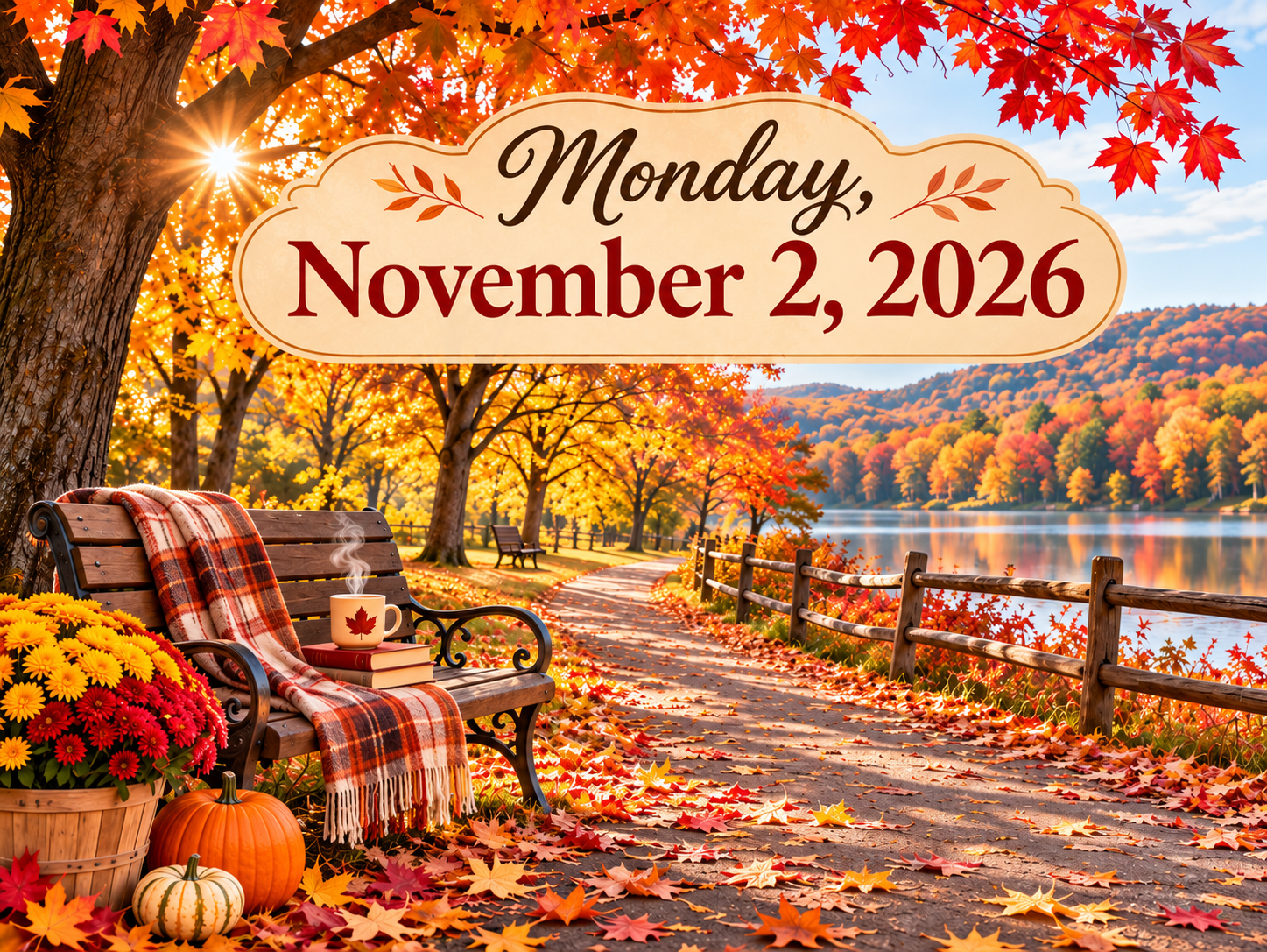
Monday, November 2, 2026
So here we are, the second day of November already! November always has a transitional feel to it, for me anyways, because it's wedged firmly between the flashy orange, black, and purple month of October and the even flashier red, green, gold, and white of December. October has its pumpkins, the beginning of autumnal weather, costumes for both adults and children, and the ghosties, goblins, and ghoulies of Halloween. December has snowy landscapes (at least in the mind, if not in reality here in south Mississippi), flannel, ribbons, presents, flashy trees brought indoors (fake or real), and Santa with his little elves. What does November have? Rain. Gloom. Elections. Veteran's Day. Thanksgiving, which, let's face it, is one of the more boring holidays. Definitely not a holiday to bring home to show the family! It's just kind of stuck in the middle, just standing there while October is jumping up and down in a clown suit and December is peeking out of a slightly open door with bright eyes and Mariah Carey's voice slipping through. It's the midpoint in the slide to the end of the year that began in October. It'll rush by with nary a notice, marked by sales and Christmas shoppers, parades supposedly for Thanksgiving but that will have a Christmas theme, and Christmas music will be everywhere! And then there's the name, which means "Ninth Month".
Why is November the eleventh month?
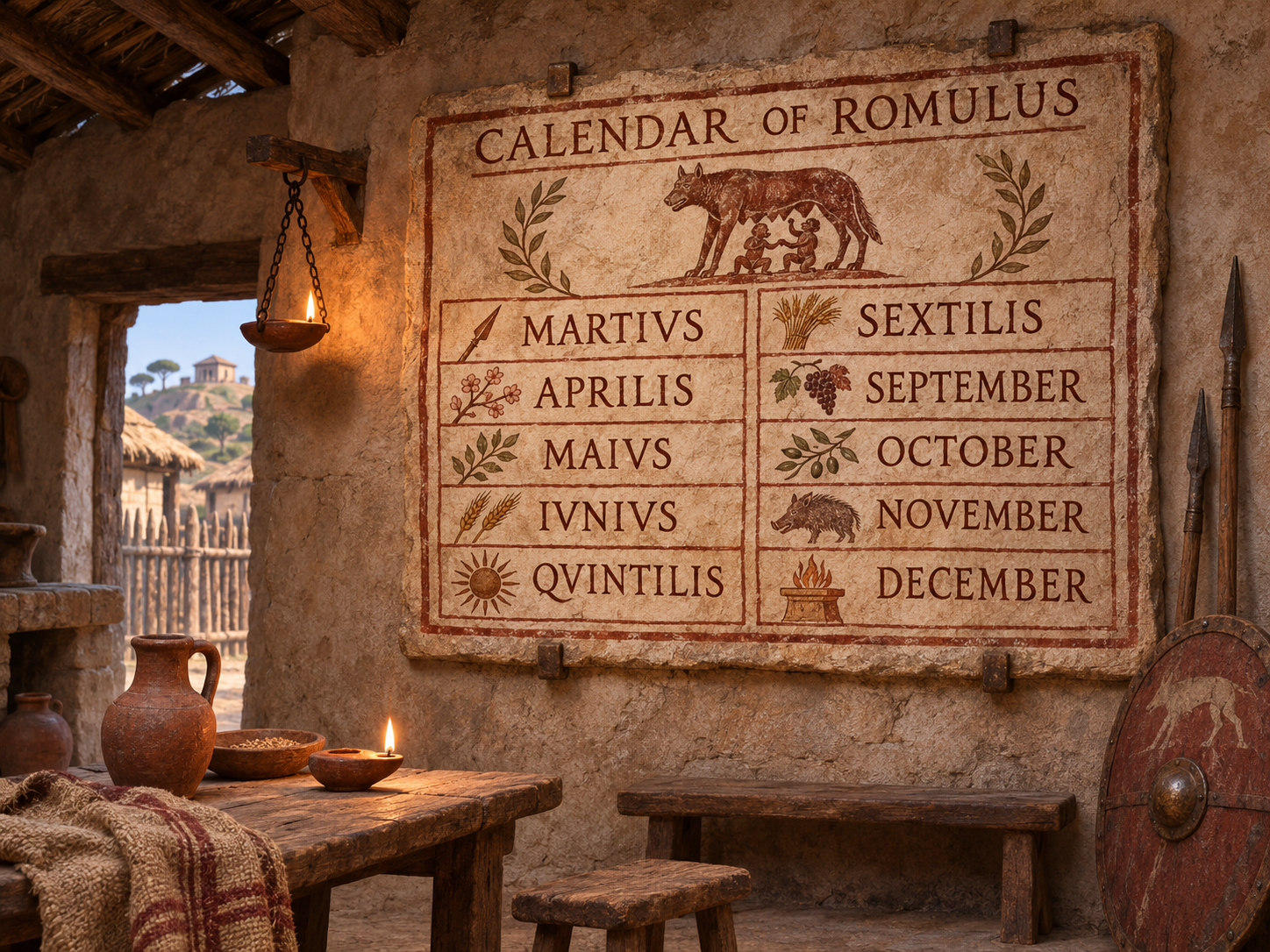
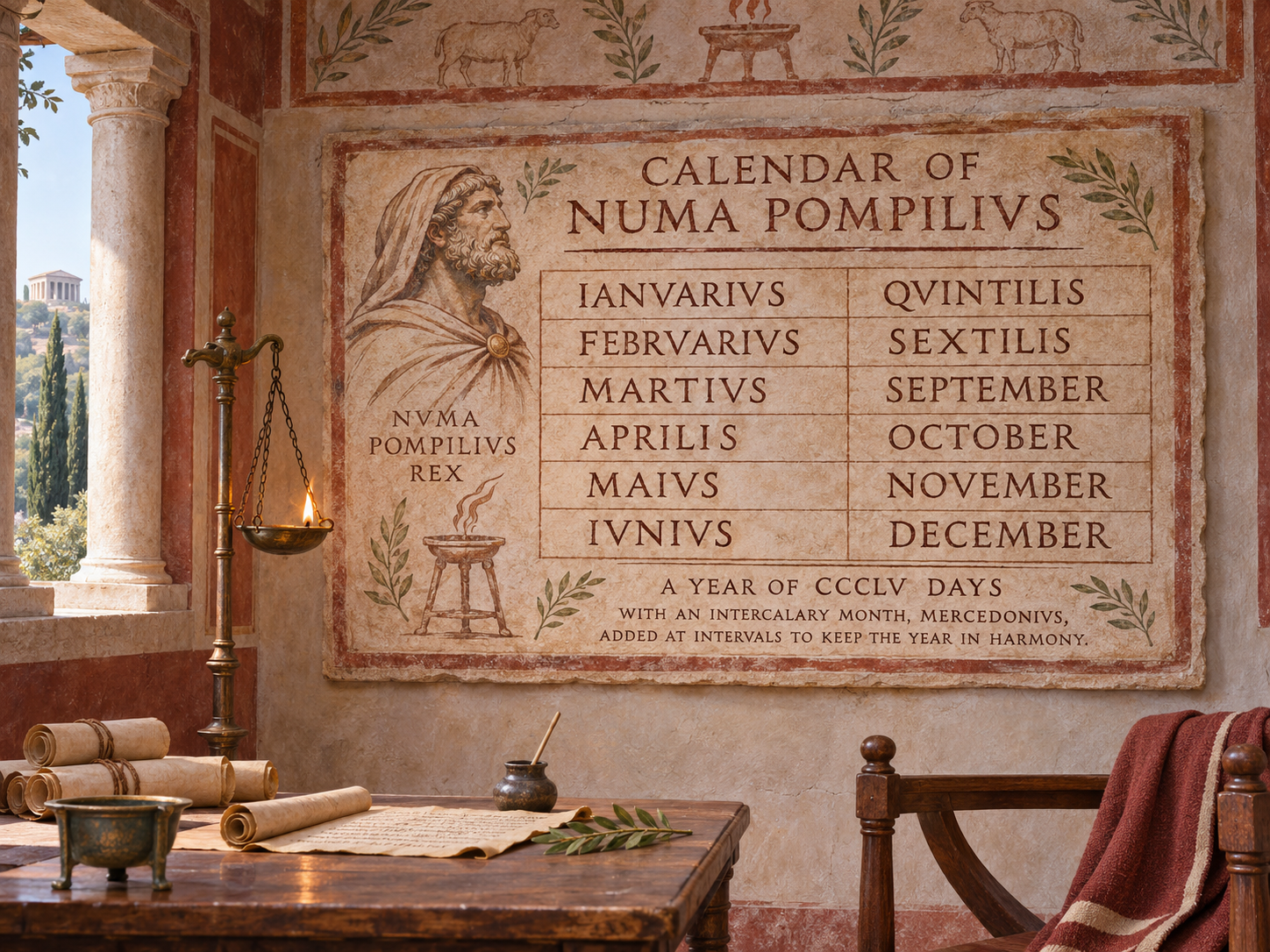
"November" comes from the Latin word novem, which means "nine". Therefore, "November" means "the ninth month". But it's not. It's the eleventh month. So why is that? Well, in the olden days, the calendar started with March as the first month. The Roman calendar only had 10 months, a total of 304 days, with 61 days during the winter months unacknowledged by name. So I guess during those 61 days, people just kind of lived in limbo, calendrically, during that time. So the 10 names of the month were originally "Martius" (March), "Aprilis" (April), "Maius" (May), "Junius" (June), "Quintilis" (July), "Sextilis" (August), September, October, November, and December.Let's break it down:
- Martius (March): Named after Mars, the Roman god of war.
- Aprilis (April): Likely derived from aperire, the Latin word meaning "to open" (referring to opening spring buds).
- Maius (May): Named after Maia, the goddess of plant growth.
- Junius (June): Named after Juno, the goddess of marriage and women.
- Quintilis (later July): Named from quintus (fifth), as it was the fifth month. Renamed Iulius in honor of Julius Caesar.
- Sextilis (later August): Named from sextus (sixth), as it was the sixth month. Renamed Augustus in honor of Emperor Augustus.
- September: Derived from septem (seven), meaning the seventh month.
- October: Derived from octo (eight), meaning the eighth month.
- November: Derived from novem (nine), meaning the ninth month.
- December: Derived from decem (ten), meaning the tenth month.
- Januarius (January): Named after Janus, the two-faced god of doors, gates, and transitions.
- Februarius (February): Named after Februa, a ritual festival of purification and atonement held during the month.
- Mercedonius: An occasional intercalary (inserted) month added after February when needed to realign the lunar calendar with the solar year.
One peculiarity about the current Gregorian calendar is that March and November always begin on the same of of the week, every single year. In non-leap years, February also starts on the same day of the week as the two of them. Leap year of course adds an extra day in February, which throws the rest of the year a day out of kilter. August and November always end on the same day of the week, even though August has 31 days and November has 30. Calendars are human inventions and all these little trifles and trivias are fingerprints for the humans that came before us that created these little oddities. Nature, after all, has no such thing as a calendar. It just cycles and circles around in its own rhythm.
November is late autumn in the northern hemisphere, but it's late spring in the southern hemisphere. Therefore, while for us the cold weather is coming into play and nature is going into hibernation, in Australia, for example, nature is awakening and greening. Nature is stretching and sending out its tendrils of life.
And that feels like a good stopping point for today. I'll delve further into November tomorrow, which for the U.S. is election day. Go vote, vote blue! Love you all!