The Life We Came Home To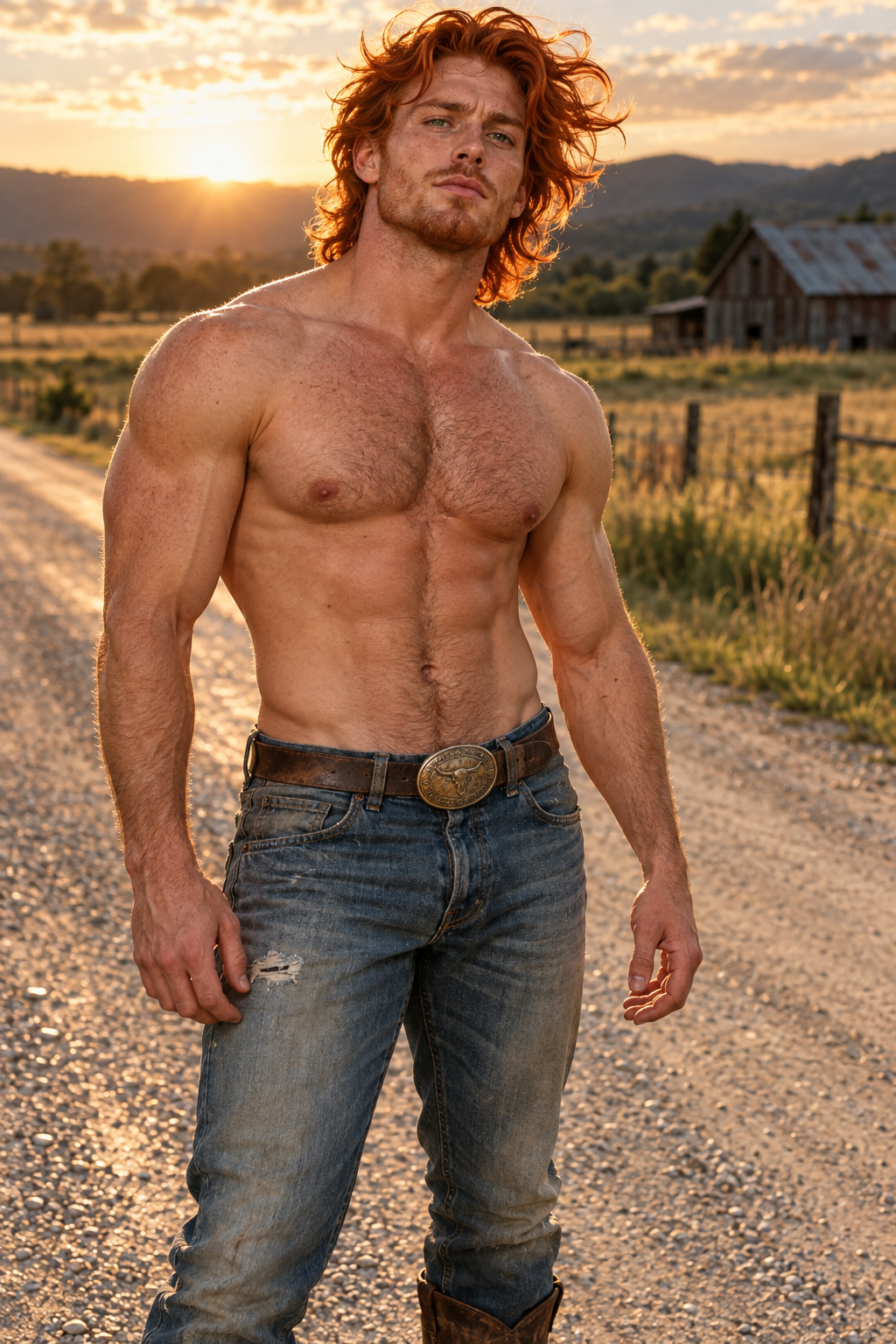
A Joe Liene Story: Story Four
“Husband,” he said. I looked at him over my coffee. “Yes?” “I’m calling you husband.” “I heard you.” “I like it.” “So do I.” I leaned over and kissed him. “Now please move. I need to get to the sink.” That was married life, at least at first. Kisses beside the sink. A shared calendar on the refrigerator. A stack of wedding thank-you cards neither of us wanted to write, even though everyone had been kind enough to give us gifts. We spent an entire evening arguing about whether we should send a card to the Welsh couple who had already written us a lovely note, then agreed we should, then forgot to mail it for a week. I would call him my husband in the store when I was talking to someone who knew us, and the word would catch in my throat for half a second. Not because I regretted it. Because I didn’t. It had become true so quickly, and then every ordinary morning kept proving it again. The farm did not change because we were married. The chickens still expected to be fed before sunrise. The horses did not care about our vows. The porch steps still complained underfoot, and the old pump by the shed still needed coaxing when the weather turned dry. Joe did most of the early work. I tried to help, but I was more useful with a clipboard than a fence post, and I had learned not to take that personally. I could tell him which feed store was open and where the spare hinge was kept. He could lift the feed sack and make the stubborn gate behave. Marriage, I found, is not always a perfect division of labor. Sometimes it is one person holding a flashlight while the other swears at a bolt. “Are you helping?” Joe asked me one morning as I stood beside him holding the flashlight in broad daylight. “I am supervising.” “You’re holding the light.” “Supervisors delegate.” He leaned over and kissed my cheek, leaving a streak of grease there. “You’re very good at it.” “I know.” I still managed the liquor store. I liked the work more than I had expected to when I first took it on. I knew the regulars, knew who was shopping for a birthday and who had had a week they did not want to discuss. I knew which shelves needed facing and which delivery drivers were going to leave the boxes in the wrong place unless I stood there and watched. The owner, Mr. Dorsey, had bought the store years earlier and was there less and less. He liked to say he trusted me to run it. For a long time, I took that as a compliment. I handled schedules, ordering, inventory, and the daily deposits. The job was busy and familiar, the sort of work that filled a day without requiring me to think too hard about the future. Joe had taken up restoration work after leaving Daniel’s job. He liked old houses and damaged wood, liked figuring out what could be saved. He came home covered in sawdust and told me stories about contractors who changed their minds after the lumber had already been cut. In the evenings I told him about the store: the man who insisted his bourbon had gone bad because he had left it open in his truck for a week, the woman who came in every Thursday to buy the same bottle of wine and pretended it was for a friend. When Joe worked late, I left supper in the oven. When I worked late, he waited with a plate covered in foil. We had not become the kind of couple that spent every hour together. We had become the kind of couple who knew when the other would be home and left the porch light on. The first year of marriage was not dramatic. I think that surprised me. There had been so much drama before it—the first fling, the years apart, the second chance, Daniel, Ethan, the wedding itself. I thought a life built out of all those turns might keep making sharp turns. Instead, most days were steady. We fed the animals, fixed what broke, went to work, came home, ate dinner, and sat on the porch. Sometimes Joe flirted with me as if he had just spotted me across a room instead of watched me butter toast. Sometimes I told him to stop being ridiculous and then leaned into him anyway. One Saturday, I was sitting at the kitchen table with a pile of receipts while Joe repaired a drawer. He came over, wiped his hands, and looked down at the paper. “You’re still working?” “I’m sorting expenses.” “It’s Saturday.” “The animals didn’t get that memo.” He pulled out a chair and sat beside me. “I’ll make you a deal. We finish these, then we go to town for dinner.” “Are you buying?” “I’m your husband. I’ll pay.” “That isn’t how marriage works.” “I know. I’m trying it out.” I smiled, and he covered my hand with his. That was the life we had come home to. It was warm and practical and a little funny. I thought we had earned it. Maybe that was the wrong word. You don’t earn a good life as if the world is handing out prizes. But after all we had survived to get there, I let myself think we had finally found something no one could take away. I was wrong about that, too.
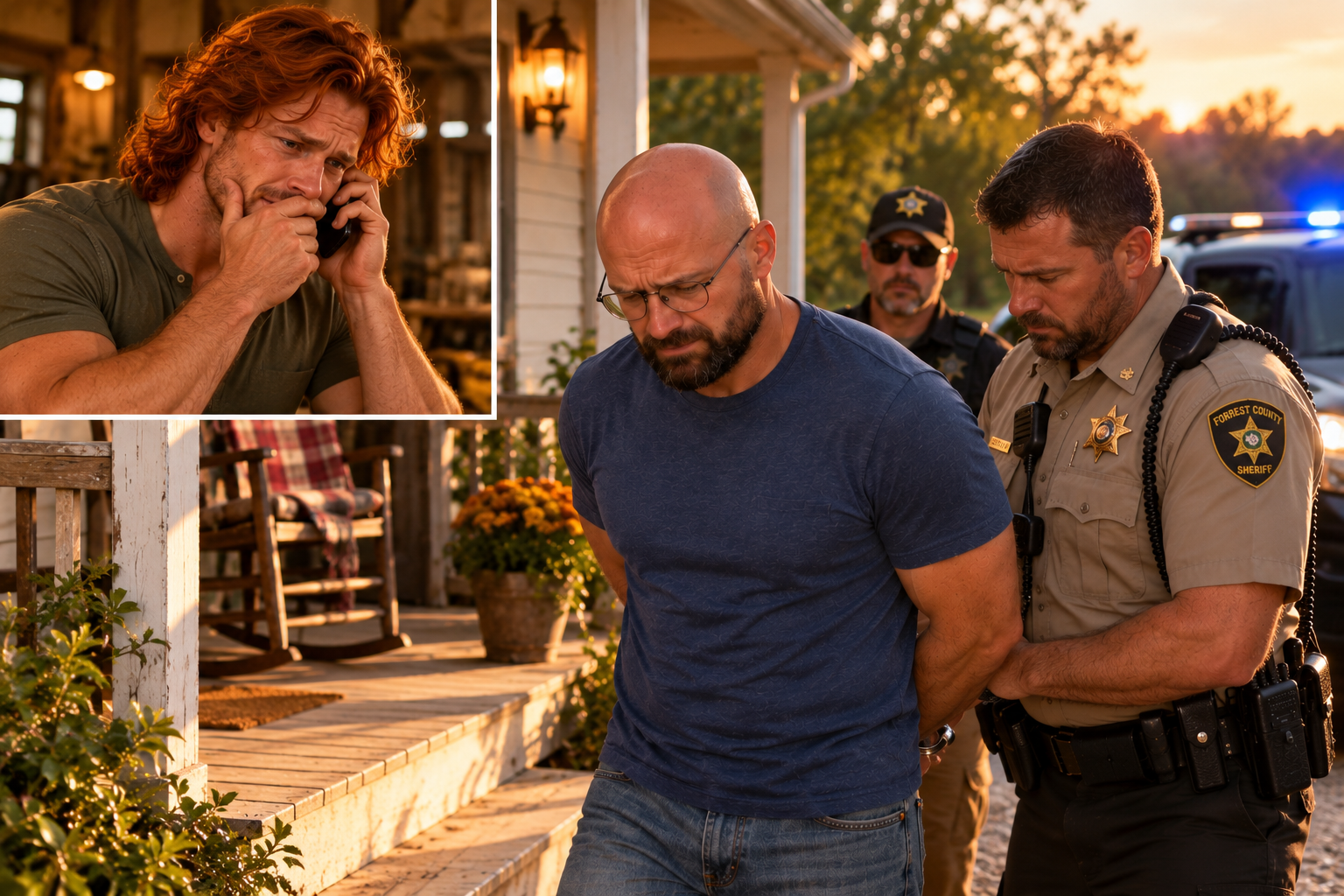
“I’ve been reviewing the books,” he said. “That sounds fun.” He did not smile. “There’s a discrepancy.” I looked at the spreadsheet on his desk. It was one of the deposit reports I had prepared. “Which one?” “Several. Over the last four months. The store is short forty-three thousand dollars.” I thought he had misread the figure. “Forty-three thousand?” “That’s what the bank statements show.” “Then we need to look at the deposits. Maybe the bank credited one late. Maybe something got entered wrong.” “I’ve looked. The money left the register, but it didn’t reach the bank.” I had already begun to feel the office change around me. The shelves of paper, the old printer, the little framed certificate Dorsey had once joked was the most expensive thing on the wall. “I prepare the deposits,” I said. “I don’t take them alone. The closing manager verifies the cash, and I keep copies of the receipts.” “Your initials are on the deposit sheets.” “My initials are on all of them.” He leaned back. “I’m not accusing you, Geoff. I’m asking you to explain it.” It took me several seconds to understand that he had already accused me. He was simply using the softer sentence first. I told him I needed to see every record. I told him the safe log and register audit should show who had opened what, and when. I said that if the bank had received less than the store had deposited, the deposit slips would tell us something. He said the records were being reviewed and that I should go home for the day. I thought he meant the day. He meant I was suspended. I called Joe from the parking lot. He answered on the second ring. “Are you all right?” he asked. He could hear something was wrong before I said a word. “I don’t know. Dorsey says forty-three thousand dollars is missing from the store, and he thinks I took it.” There was a short silence. “Where are you?” “In the lot.” “I’m coming.” “Joe, you’re at the jobsite.” “I’m coming, Geoff.” He got there in twenty minutes. I sat in the truck with the window down, watching customers walk in and out as if the store had not just turned into a place where I was suspected of stealing. When Joe opened the passenger door, I looked at his face and started crying. I had not planned to. I had thought I would be angry, or practical, or at least able to explain what happened in order. Joe climbed in and pulled me against him. “I believe you,” he said. I held the front of his shirt. “You don’t even know what happened.” “I know you.” “He said my initials are on the sheets.” “Your initials are on everything you do there.” “What if I made a mistake?” “Then we find the mistake. That is not the same thing as stealing.” I wanted to believe him. I needed him to be right. We sat in the truck until my breathing slowed, and then he drove me home. I thought the worst part would be the accusation itself. I did not yet know that three days later a detective would come to the farm and told me to turn around. The detective arrived just after lunch on Friday. Joe had left for a job in town, and I was on the porch trying to make sense of a letter from the store’s insurance company. I remember the detective’s shoes more than his face. Black, polished, and too clean for the gravel drive. He introduced himself as Detective Carver and asked if I had a few minutes to answer questions. I said yes. He said he needed me to come down to the station. “Am I under arrest?” I asked. He glanced at the other officer beside him. “You are being taken in on a warrant for embezzlement and theft.” For a moment I heard the words as if they belonged to someone else. Then the letter slid off my lap and fluttered onto the porch floor.
“You can call an attorney once we get you processed.” “He’s my husband. He needs to know where I am.” Carver looked at me, not unkindly, but with the practiced patience of someone who had said the same thing a hundred times. “You can tell him now, before we leave.” I called Joe. He answered, and I said, “There’s a detective here. They have a warrant.” “What?” “They’re taking me in.” “Don’t say anything else to them. I’m on my way.” “Joe, I don’t know—” “I’m coming.” He was still on the phone when the officer asked me to turn around. I sighed, told Joe I had to go, hung up, put the phone in my pocket. Then I put my hands behind my back, and the cuffs closed around my wrists. I had seen people arrested on television and assumed it would feel like a dramatic moment. It did not. It felt humiliating, small, and strangely quiet. The metal was cold. The officer checked that he could fit a finger beneath the cuffs. The gravel shifted under my shoes as I walked toward the car. I could see the porch, the old chairs, the sign that said Geoff’s House in Joe’s uneven painted letters. I thought, absurdly, that I had not brought the laundry in. The drive to the station took less than half an hour. Carver asked a few questions. I told him I would answer through my lawyer. He said that was my right, and then the rest of the drive was silent. I watched pine trees slide past the window and tried to keep my breathing even. I had done nothing wrong. I knew that. I kept repeating it because the sight of the cuffs had made knowledge feel less useful. Booking was a collection of forms, fingerprints, a photograph, a search, and a small plastic bag for my belt and shoelaces. The officer asked me to empty my pockets. I had two receipts, a piece of gum, and the little note Joe had left me that morning reminding me to buy feed. It said, “The hens are plotting something. Keep an eye on them.” I stared at it long enough that the officer asked if I was finished. “Sorry,” I said. “It’s a note from my husband.” He slid it into the property bag with my keys. Then he took my picture. I was angry, scared, and tired, and all I could think was that the photo would make me look guilty because I had not slept well. That was not how evidence worked. I knew it was not how evidence worked. Still, I wanted to tell the camera that I had just been pulled away from my own porch. Joe got there before the magistrate finished reviewing the warrant. I heard his voice in the hallway. He was talking to a lawyer, not shouting, but there was something in the way he said my name that made me press my hands together. He had found an attorney named Sara Bell through a friend of the family. She came into the interview room wearing a dark jacket and carrying a legal pad. “Don’t answer questions about the store,” she said. “Not one question, even if it sounds harmless. We’ll get the discovery and see what the state thinks it has.” “I didn’t take anything.” “I believe that is what you’re telling me. We’ll prove what happened by looking at the records.”
Outside, I asked Joe, “You used the travel money?” “It’s money,” he said. “We can make more.” “What if this takes months?” “Then it takes months.” “What if—” “Geoff.” He stopped me gently. “We are going to deal with what is in front of us. Right now, you’re coming home.” He kissed me in the parking lot, not caring who saw. I was grateful for that. I felt as though the whole town had already decided what kind of man I was, and Joe was the one person willing to act as if I were still me. The weeks before trial were worse than I expected. The indictment said I had taken cash deposits on eleven separate days. The store’s ledger showed that I had signed the slips. Mr. Dorsey told investigators I was the only person with routine access to the safe. He claimed the register closeout matched the amount entered on each deposit sheet, but the bank received less. The state had a clean, simple story: the manager had taken the difference and falsified the paperwork. They had an amount, dates, my initials, and an owner who said he trusted me until the money went missing. Sara asked for every record. We got deposit slips, register reports, camera footage, key logs, bank statements, emails, and staff schedules. The store’s camera system had overwritten some footage, which seemed like bad luck at first. The footage that remained showed me carrying the deposit bag to the safe on two of the dates in question. It did not show what happened after I left. A closing clerk testified that I usually made the deposit bag and that she signed the safe log after checking the register total. She could not remember whether she saw the cash count on those dates. She was not lying. She had been working two jobs and caring for her mother. Her memory was simply not a security system. The bookkeeper who handled quarterly accounts said she had relied on the figures Dorsey supplied. The bank records showed deposits below the logged totals. Dorsey testified before the grand jury that he had not accessed the safe except in emergencies, and he said there had been no emergencies. He told the prosecutor the business was in good shape. Sara found overdue invoices and a notice from the landlord, but the state said those were unrelated. I read every page until the numbers blurred. I had no training in accounting, but I knew when a total was wrong. I had spent years catching small errors before they became large ones. Now the state had turned my own habit of checking things into part of its case against me. People in town stopped talking when I walked into the grocery store. Two customers I had known for years asked if the charges were true. One of my former coworkers told me she knew I would never do such a thing, then admitted she had heard I was being kept from the store because I was dangerous. That made no sense, but rumors do not have to make sense. They just need a name to attach themselves to. Joe took me to every meeting with Sara. He sat at the kitchen table with a yellow legal pad and wrote down anything he thought might help. He did not try to manage my case for me. He asked questions, remembered dates, and made sure I ate something. Sometimes at night he woke and reached for me before he was fully conscious. I would lie still and let him find me. It was the same small touch he had given me after Daniel, after Ethan, after every time life had asked us whether we meant those vows. The trial was set for the following spring. By then I had learned to recognize the look people gave me when they had already made up their minds. I had also learned that being innocent did not feel like being safe. It felt like waiting for somebody else to notice the truth. On the first morning, Joe drove me to the courthouse. He wore a dark suit and a red tie. I wore navy. We had both dressed as if we were going to a funeral, which was not far off from how the day felt. Before we went inside, he took both my hands. “You don’t have to look brave for me,” he said. “I don’t feel brave.” “Then don’t pretend. Just keep telling the truth.”
Sara’s opening was short. She said the state had mistaken access for proof. She said the jury would hear that the deposit records were created in a system Mr. Dorsey controlled, and that the investigation had accepted his word without checking his finances. She promised to show that the money had not disappeared at the store. It had been taken after the deposits were logged, by someone with a reason to hide the company’s losses. The first few days did not help me. The clerk testified. The bookkeeper testified. The bank manager displayed the short deposits and explained that the bank had no record of receiving the full cash totals. A technician described how the security system’s footage had been overwritten. The prosecutor brought up the fact that I had once corrected a register discrepancy by entering an adjustment under my own credentials. I had done that openly, with the closing clerk beside me, because a register had frozen and the receipt printed twice. It was in the audit trail. But hearing it described in court made it sound like a practice run. On the fourth day, Mr. Dorsey took the witness stand. He looked tired, but not nervous. He said he had trusted me. He said the store had been short on cash and that he had assumed I would come forward if there had been a mistake. He said he had never taken money from the deposits. He said the business was stable enough that he had no reason to do so. Sara asked him about the business records. “Did you personally review the bank statements every month?” “Not every month.” “Did you sign the register reports?” “I reviewed the summaries.” “Did you have an individual login to the cash management system?” “Yes.” “Could you alter the deposit entries?” “No. Not once they were finalized.” Sara showed him a report from the store’s point-of-sale system. “This report says the deposit total for November 14 was entered at 10:42 p.m. Your employee code was used to edit it the following morning. Is that your code?” Dorsey glanced at the page. “I don’t remember.” “You testified that you never edited finalized deposits.” “I said I didn’t change the totals.” “Did you change this one?” “I couldn’t say.” The prosecutor objected. The judge told Sara to move on. She did. For the first time since the trial started, Dorsey looked uncomfortable. At lunch, Sara told me the state had produced a new set of bank records that morning. The records had been requested months ago, but the bank had needed time to retrieve old images and account histories. One account belonged to the store. Another was held by a company Dorsey owned. Several cash deposits from the dates in question had gone into the company account. There were also wire transfers from the store to that company, followed by payments to a lender who had a lien on the store’s inventory. “What does that mean?” I asked. “It means we need to see exactly what is in there. We’ve asked for a short recess and permission to bring in our forensic accountant. The prosecutor has the same records now.” “Does it prove he took it?” “It proves the state’s theory is incomplete. It may prove much more, but I won’t overpromise.” She asked the judge to delay the next witness until the records could be reviewed. The prosecutor opposed the request, then asked for a copy of the new statements himself. We spent the afternoon in a hallway while the lawyers looked through pages. Joe sat beside me on a wooden bench and held my hand. I could feel my pulse in my fingers. The accountant had been hired by the defense before trial. He had studied the books and found inconsistencies, but the crucial bank records had not arrived until then. He spent the evening sorting through them. The next morning, Sara walked into the courtroom with a new binder. The prosecutor had one too. Dorsey was called back to the stand. Sara asked whether he had opened a second bank account in the name of Dorsey Beverage Holdings. “I have several business accounts,” he said. “Did you deposit cash from the store into that account?” “I don’t believe so.” “Would it refresh your memory to see the bank’s deposit images?” The judge let her approach. Dorsey looked at the copies. One showed a deposit of $5,800. Another showed $4,250. The account numbers and dates were clear. The store’s ledger marked those exact amounts as cash received by the bank. The separate company account had received money on the same dates, within hours. Dorsey said the funds could have been reimbursements. Sara asked what they reimbursed. He said he would need to check. She asked whether he had told the investigators about the account. He said he had not been asked. Sara showed him the interview transcript. The detective had asked whether he controlled any other accounts into which store receipts might have been deposited. Dorsey had answered no. The courtroom seemed to lose its air. I could hear the paper shift as jurors leaned forward. The prosecutor asked for a recess. The judge called counsel to the bench. We were sent into the hall again. Joe stood up with me, his hand at the small of my back. I was trying to understand what I had heard. The question was not only whether I might be cleared. It was that the man who had watched me be arrested had taken money from the business himself. When we returned, the prosecutor asked to recall Dorsey. He asked whether the store was in financial trouble. Dorsey said it had been under pressure, but that was not the same thing as bankruptcy. He was asked about the company’s unpaid taxes and the lender’s demand for repayment. He said those matters were private. The judge ruled that the records were relevant because Dorsey had testified that the store was financially stable and that he had no motive to redirect its funds.
Sara’s next question was plain. “Did you take cash from the store’s deposits?” “No.” “Did you route the money into your other company?” “No.” “Then how did these deposits enter your company account?” “I don’t know.” She put up a printed email, sent from Dorsey’s work account to his accountant two weeks before my arrest. It said: We have to get ahead of the missing deposits before the bank freezes the line. Geoff’s initials are on the slips. If this lands on him, we can buy time. I had never seen it. The prosecutor had not seen it until the bank’s records prompted a subpoena to Dorsey’s accountant. Sara asked Dorsey whether he had written it. He said it had been taken out of context. She asked what context could make “If this lands on him, we can buy time” mean something else. He did not answer. The judge called another recess. This time the prosecutor and Dorsey’s lawyer went into a conference room and did not come out for almost an hour. When the court resumed, the prosecutor told the judge the state would not continue the case against me. The evidence had changed. The state moved to dismiss the charges with prejudice. The judge granted it.
Free to go. Such a small sentence for the size of the thing that had just ended. I stood up. My knees felt uncertain. Joe came around the table and wrapped both arms around me. I held on to him in the courtroom, with the jurors still sitting there and the prosecutor gathering his papers. I did not care who saw. I had spent months trying to imagine the moment when I would be cleared. I had thought I would feel triumph. I felt sick, and tired, and grateful, and furious all at once. Mr. Dorsey was escorted out through another door. A few days later he was charged with fraud and falsifying business records. The liquor store was placed into receivership and then closed. The company did go bankrupt. The money had been disappearing long before he accused me. I learned later that my name had given him a clean explanation for a mess he had made himself. The court awarded me compensation for the wrongful accusation, the lost wages, the legal bills, and the damage to my reputation. There was a settlement as well. It was more money than I had ever had in my account at once, enough to restore what we had spent on the bond and the lawyers, pay our debts, and still leave a substantial amount invested for the future. It did not give me back the months when I had been afraid to answer the door. It did not make people unhear the rumor. But it gave me a little room to breathe. Joe took me out to dinner that evening. I barely ate. He ordered a bottle of wine and raised his glass. “To being home,” he said. I touched my glass to his. “To being believed.” He leaned across the table. “I never stopped.” “I know.” I did know. That was the part I carried with me more than the verdict. When the cuffs closed, when the booking officer took my picture, when a courtroom full of strangers heard my name beside the word theft, Joe had stood beside me. He had not tried to pretend it was easy. He had not promised no one would believe the accusation. He had simply kept choosing the truth about me, even while the world was busy choosing a different story.
“Do you want to go to Australia?” he asked. I looked at the cover. There was a photograph of a red desert at sunset, the rocks turning copper against a purple sky. “Australia?” “We’ve talked about it.” “We talked about it before we got married, when we were looking at flights to Scotland and pretending we could afford to go anywhere we wanted.” “Now we can afford it.” “Are you asking me to go, or are you telling me you already looked at flights?” “I did both.” I laughed. “Of course you did.” He sat down across from me. “We should do something that feels like ours. Something that isn’t a courthouse or an attorney’s office or a bank statement.” Australia sounded impossible, which was one reason I liked it. We started with a map and a list. Sydney. The Great Barrier Reef. The Blue Mountains. Uluru, though we would need to learn more and plan carefully. We argued over how long to stay, then agreed that if we were going all that way, we should not rush it. We had enough from the compensation to pay for the trip, and enough left after that to keep the rest of our lives secure if we were sensible. I had never been especially good at being sensible with vacation plans. Joe had never been especially good at pretending he was. His aunt and uncle volunteered to drive us to the airport. His uncle had moved closer to town the year before, but he still came out to the farm most weekends. His aunt, Marlene, was the practical one who remembered everybody’s medication, phone charger, and preferred breakfast. His uncle, Ray, was the one who thought a long drive was improved by a thermos of coffee and a story he had told at least three times. “I’ll get you to the airport,” Ray said. “It’s the least we can do after everything.” “You don’t owe us anything,” I told him. “I know. I’m offering to do something for my favorite nephew-in-law.” He smiled Ray's enigmatic smile that always brightened up my day. They were going to pick me up at the farm, then drive to Joe’s jobsite across town. Joe would finish up, change, and we would all head to the airport together. It made sense. Their house was closer to the farm than the jobsite, and Joe had a truck full of tools he did not want to leave overnight. We could have driven ourselves, but they insisted. Marlene said the last thing she wanted was to see me worrying about parking before a twelve-hour flight. On the morning we left, I woke before the alarm. The house smelled like coffee and clean laundry. Joe was already gone; he had taken the truck to the jobsite before sunrise, leaving me to finish packing and meet his aunt and uncle. My suitcase was by the porch. The sky was pale, with a thin layer of cloud over the fields. I had a passport in my jacket pocket and a paper copy of our itinerary in the outside pocket of my bag. Joe had put a small photograph of the two of us from Scotland in his wallet. I had one tucked into my passport cover. We were organized, for once. Marlene and Ray arrived at nine. Marlene came up the porch steps carrying a travel mug and a paper bag. “I brought biscuits,” she said. “I know you’ll say you’re not hungry, but that’s because you’re nervous.” “I’m not nervous.” She gave me the look. “You’ve been checking that suitcase for an hour.” “That’s just how I am.” “Exactly.” Ray loaded my bag into the trunk. Joe had called to say he was nearly done and could meet us at the site. I hugged Marlene, then Ray. He patted my shoulder and told me he had a feeling we were going to have a wonderful trip. I said I hoped so. I was glad they were taking us. I was glad to have our family there at the start of something good.
I remember Marlene saying, “That fellow’s coming over the line.” I remember Ray’s hands tightening on the wheel. Then there was a horn, long and blaring. White light filled the windshield. Ray turned hard to the right, and Marlene grabbed the dashboard. The truck slid onto the shoulder. I heard gravel strike the underside. I felt the seat belt lock across my chest. The other vehicle swerved with us. It was a work van, large and fast, and it clipped the front of Ray’s car with a sound I still hear when I wake from a dream.
Then the car stopped. For a little while, I could not see. I knew I was upside down or sideways, though later I learned the car had only ended up angled across the shoulder. My body believed it had rolled. I tried to move my arms. Something sharp and hot ran through my left side. I gasped, and the sound turned into a cough. “Geoff?” someone said. I did not know whether it was Joe. I could not answer. I could taste blood and the dry chemical dust from the airbag. I heard a horn still sounding somewhere nearby. There was shouting outside, then the sound of another car door opening. A man told me not to move. “Joe,” I managed. “Stay still,” the man said. “Help is coming.” I tried to look toward the front seat. The window was gone, the windshield cracked into a white web. I could see a blur where Ray had been. I could not see Marlene clearly. I tried to say their names, but the pain rose and drowned everything else. The next thing I remember was an ambulance ceiling, bright white and moving. A paramedic had his hands on my chest. Another was talking to me, asking my name, the date, whether I knew where I was. “Geoff,” I said. “Good. Can you tell me what happened?” “Car.” “That’s right. You’re in an ambulance. We’re taking you to the hospital.” “Joe.” “We’ve called him.” “Aunt Marlene. Ray.” The paramedic’s face changed. It was not a big change. A tightening at the eyes. A pause before he spoke. But I saw it. I tried to sit up. He put one hand on my shoulder. “Don’t move. You’ve got injuries. We’re looking after you.” “Are they alive?” “We’re still working on them.” I held on to that sentence because it was not no. Then the ceiling tilted away and I was gone again. I surfaced under bright lights. Someone was cutting my shirt. My mouth was dry. My left leg felt as if it belonged to someone else. I heard a monitor beeping and a nurse telling someone my blood pressure was dropping. I felt a hand around my fingers.
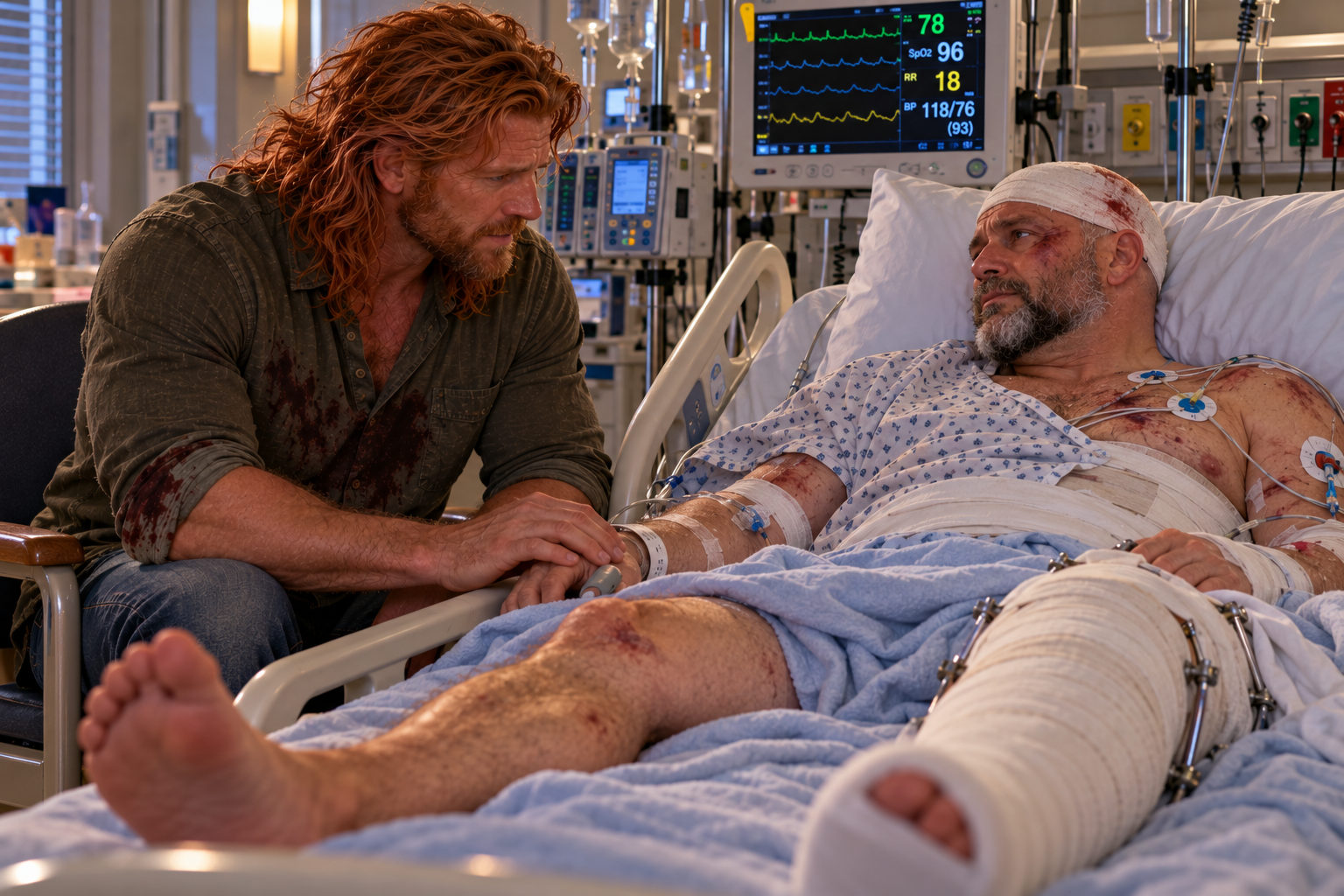
“I'm here.” His voice was close and broken. I tried to turn toward him, but a brace held my neck in place. “Don’t move,” he said. “You’re in the hospital. You’re safe.” “Ray?” Joe did not answer immediately. I could feel his thumb brushing the side of my hand. It was the same small movement he made when he was trying to keep me with him. “Where’s Marlene?” I asked. “Geoff, you need to rest.” “Joe.” He leaned close. I could hear him take a breath. “They’re working on them. I’m here with you.” That was not an answer. I was too tired to force one. The room rolled into darkness again. When I woke again, the light was softer. The room had a window, though the blinds were mostly closed. My body had become a collection of pains with a few pieces of me still attached. My head throbbed. My chest hurt when I breathed. My left leg was heavy and numb, and my hip felt as though someone had driven a wedge through it. I could not tell whether it was morning or night. Joe was in the chair beside the bed. His shirt had a dark stain on the front. There was dried blood on one sleeve, not mine, I thought, though I could not be sure. His hair looked as if he had been running his hands through it for hours. When he saw my eyes open, he stood so quickly the chair scraped the floor. “Hey,” he said. “You’re awake.” “I think so.” My voice came out rough and thin. He reached for my hand, then stopped as if he was afraid I might be hurt by even that. The nurse had most likely told him what he could touch. He settled for laying his fingers over mine. “You’ve been in surgery. They repaired your pelvis and your left femur. You’ve got broken ribs and a concussion. They’re watching your breathing and the swelling in your head. You’re in intensive care.” I tried to move and the room tipped. “Marlene?” Joe looked down. That was when I knew. I was still trying to make the answer into something else, but I knew. I squeezed his hand, or tried to. “Joe.” He leaned close to me. “Ray and Marlene died at the scene.” I could not take in the whole sentence. It came in pieces. Ray. Marlene. Died. At the scene. I shut my eyes, but that did not make it disappear. My body began to shake, and the monitor changed its rhythm. Joe spoke to me, but his voice had gone far away. I heard a nurse come into the room. Someone told me to breathe slowly. Someone else said I needed to rest. I wanted to tell them I could not rest. The people who had brought us coffee and biscuits, who had offered to drive us to the airport, were gone. They had died before we had even made it to Joe’s jobsite. Eventually, they got me stable again and, once they were satisfied I'd be fine, left Joe and me alone. My eyes were still shut, trying to shut out the world and the horror of Ray and Marlene not being a part of that world anymore. I opened my eyes. “Were they hurt?” Joe’s face tightened. “They were gone before they suffered. That’s what they told me.” I searched his eyes for some sign he was trying to make it easier. He was not. He was telling me the truth as gently as he could. His own eyes were red. His mouth shook when he tried to speak again. “I’m sorry,” I whispered. He smiled sadly. "I know, Geoff. I know what they meant to you as well. We both lost them." I tried to say his aunt’s name and only managed a breath. Joe bent close and put his forehead against my fingers. He began to cry quietly, the way people do when they are trying not to disturb a room full of machines. I wanted to comfort him. I wanted to hold him. I could not lift my arm. So I kept my hand in his, and he held on as if that small contact was enough to keep both of us in the room. I was asleep again a minute later. Over the next few days, waking was like coming up from underwater. Sometimes I found Joe sitting beside me. Sometimes a nurse was adjusting a line in my arm. Sometimes a doctor asked me to follow his finger or squeeze his hand. Each time I surfaced, I had to figure out where I was. The hospital smelled like antiseptic and warm plastic. The lights hummed. My mouth was dry. My left leg was bound and supported, and a brace ran around my pelvis beneath the blanket. I had tubes and wires in places I could not see. I could not sleep for more than a short time, but I could not remain awake for long either. On the second day, a doctor explained that I had a complex pelvic fracture, a broken femur, four broken ribs, a fractured collarbone, and a moderate concussion. They had operated on my leg and pelvis to stabilize them. They had also repaired a tear in my spleen. The first surgery had taken several hours. They had kept me sedated afterward because my blood pressure had been unstable and my head injury needed watching. “Will I walk?” I asked. The doctor did not rush to answer. “We believe you will. But you have a long recovery ahead. We need the bones to heal. You’ll begin with physical therapy, and you won’t be putting weight on that leg for some time.” “How long is some time?” “Several weeks, at least. We’ll know more as we see how the repairs are healing.” Joe sat beside the bed and listened. He did not look away. After the doctor left, he put his hand around mine. “You heard him,” he said. “They think you’ll walk.” “I heard ‘long recovery.’” “That part is true too.” “What if they’re wrong?” “Then we’ll ask what we do next.” “I hate that answer.” “I know.” He had brought our wedding rings in a small cloth pouch. The nurses had removed mine before surgery and put it with my clothes. Joe wore his. He did not put mine back on yet; my fingers were swollen and the hospital had asked him to wait. He held the ring between his thumb and forefinger while he sat with me, turning it around and around. I watched him do that and thought of the ceremony. His promise to come to me when he was afraid instead of hiding in his own head. I wanted to tell him he could be afraid now. He did not have to be the strong one every minute. But I could not get the words out before I drifted away again. The first time I sat up, I vomited. The second time, I cried before the physical therapist even touched me. She told me not to be embarrassed. I was not embarrassed. I was frustrated that my body had become a place where other people had to move me around. The therapist raised the head of the bed, waited for the dizziness to pass, then helped me sit at the edge. Joe stood on the other side of the bed, face pale, his hands clenched at his sides. “I’m all right,” I told him. “You’re sitting upright,” he said. “That seems like a good start.” “It’s a terrible start.” “It’s the start we’ve got.” I wanted to make a joke, but the effort of staying upright took everything I had. My vision darkened at the edges. The therapist lowered me back into bed. Joe caught my hand. That night I could not stop replaying the crash. A horn. Marlene’s hand on the dashboard. The airbag. The silence after. I could not make myself sleep. Joe sat in the chair until dawn, reading a book he never turned the page of. By the fourth day, I was awake long enough to understand that a funeral was being planned. Joe’s cousin called him from the hallway. I heard him say, “He knows. Yes, he knows. No, don’t wait for us.” His voice cracked. I called his name. He came back into the room and sat down. “They’re going to have the service on Saturday,” he said. “My cousin will make sure we can watch if you want. You won’t be able to go.” “I should be there.” “You’re in the hospital.” “They gave us a ride.” “Geoff, you didn’t cause the accident.” “I was there. I could have—” “No.” He said it firmly, and then softened. “No. The van crossed the line. The police have the witnesses and the road marks. Ray was trying to get out of the way. There wasn’t a choice you could have made from the back passenger seat.” I shut my eyes. He sat beside me. We did not discuss the funeral again until later, when a nurse helped set up a video call on her tablet. Joe sat close enough that his shoulder touched mine. I saw a small room full of people in dark clothes. I heard the minister speak about Ray’s steady hands and Marlene’s fierce devotion to the people she loved. I saw Joe’s cousin standing beside two framed photographs. I started crying and could not stop. Joe did not try to make me stop. He kept one arm carefully around my shoulders until the service ended. When the screen went dark, I whispered, “I’m sorry we couldn’t be there.” Joe’s face was wet. “They knew you loved them.” I turned my head toward him as far as the brace allowed. “You did too.” “Yes,” he said. “I did and do.” He bent and kissed my forehead. Then he covered his eyes with one hand. I felt the shape of his grief in the room, and mine seemed to fold itself around it. I could not lift him. I could not bring him water. I could not even take his hand without the monitor protesting. So I told him to come closer. He moved the chair beside the bed and leaned in, and I pressed my cheek against his shoulder. It was not much. It was all I had. The next morning the surgeon explained that my bones were stable enough for me to leave intensive care. I was moved to a regular room. I had an oxygen line beneath my nose and a walker beside the bed, though I had no idea how I was expected to use it. Physical therapy came every day. They taught me how to move from the bed into a chair without twisting my pelvis. At first I needed two people and a transfer board. It took twenty minutes and left me drenched in sweat. I could not help feeling that I had failed at something, even though no one had asked me to do it well. They only asked me to do it safely. The first time I stood, I had to hold the walker while the therapist supported me and Joe watched. My left leg was not allowed to bear weight. I could put my right foot down, but the effort sent pain across my hip and ribs. I lasted nine seconds. The therapist told me that was good. “Nine seconds?” I said. “I used to stand in line at the post office longer than that.” Joe smiled. “You’re going to make a lot of progress.” “I used to walk to the mailbox.” “You will again.” I wanted to believe him. I also wanted him to stop saying things as though they were certain. I did not tell him that. I was too tired, and he was too sad. Two weeks after the crash, I was transferred to a rehabilitation unit. I had gone from one hospital room to another without ever leaving the building. The rehab room had a view of the parking garage and a whiteboard with my goals written in blue marker: sit unsupported, transfer with one person, wheelchair mobility, standing practice. It looked like a list for someone else. I had been a man who carried feed sacks, drove to work, lifted boxes at the store, climbed the porch steps without thinking. Now my first goal was to get from bed to chair without help from two people. Joe stayed with me every day. He brought food from home when I could eat it, though the hospital staff had strict rules and most of what he brought was not allowed. He brought my own pillow, a soft shirt, and the little wooden spoon he had bought in Galway. He said the spoon did not belong in the hospital, but he had packed it anyway. I asked why. “It reminds me of the trip,” he said. “We’re still going.” “We can’t go to Australia now.” “No. Not now.” I thought he meant we would cancel it. He was saying something else. The trip was still there, somewhere ahead of us. Our life was still there, even if we had to reach it by a different road. Some afternoons I was alert enough to talk. Other times I slipped into sleep halfway through a sentence. The concussion made it difficult to keep track of time. I would wake believing it was morning, then find the sky dark. Sometimes I forgot that Marlene and Ray were dead and asked when they would visit. Joe had to tell me again. The first time it happened, his face crumpled. The second time, he sat down beside me and said their names gently. By the third, I could see the pain he was trying to hide, and I was angry at my own brain for making him do it repeatedly. One evening, after I had asked about them again, I gripped his fingers. “I know they’re gone. I know. I’m sorry I keep making you say it.” “Don’t be sorry,” he said. “You had a brain injury. It’s alright if you need to be told.” “It isn’t alright for you.” He looked down at our hands. “I miss them.” “I know. Me too, baby.” “I keep thinking I should have been in the car.” “Joe.” “They were taking you to pick me up. If I had gone to the farm first, or if I’d asked Ray to wait—” “You couldn’t have known.” “I know that.” “Then don’t punish yourself for not knowing.” He sat quiet. I could not reach his face, so I turned my hand over and rubbed my thumb along his knuckle. “You stayed with me. You’ve been here every day. I know that isn’t what happened to them, and it doesn’t make it fair. But they would know you were here.” He bent his head and pressed his forehead to mine. We stayed that way until a nurse came in to check my medication. It was the first time I had been able to comfort him since the accident. I felt, for a moment, like his husband again and not only a patient. The hospital kept me for nearly a month. My ribs healed slowly. My leg hurt whenever the medication wore off, and the concussion left me with headaches and a kind of fog that made conversations feel too bright. Joe’s work crew held his place open. He had called them once, from the hallway, and told them he would not be back for a while. One of the contractors had offered to help with the farm, and Joe’s cousin came out to feed the animals. The cats kept eating as though the human world had not changed. The chickens had no sympathy. They were, as I suspected, still plotting something. Discharge day was not the triumphant moment I had imagined. There was no walking out. They wheeled me to the curb and helped Joe fold the wheelchair into the back of the truck. The ride to the farm was uncomfortable. Every bump traveled through my pelvis. Joe drove slowly and kept asking if I needed to stop. I told him no, then told him yes, then told him he could stop at the next safe place. It took nearly an hour to get home. He helped me out of the truck and into the wheelchair. I saw that he had built a ramp for the porch, and he pushed my chair up it. The porch sign was still hanging above us. Geoff’s House. The letters were uneven, and one corner had begun to peel. I wanted to point it out and ask him to repair it. I couldn’t find the energy. Joe saw me looking and said, “I’ll fix the sign when you can stand there and tell me how.” “I can tell you now.” “You can. But I’ll pretend I need your supervision.” He had moved a bed into the front room so I would not have to climb the stairs. There was a shower seat, grab bars, a stack of clean towels, and a handwritten schedule on the refrigerator with medication times and physical therapy exercises. I looked at the schedule and started to cry. Joe came around to the front of the wheelchair. “Too much?” “It’s very organized.” “I thought you’d like that.” “I do. I just hate that I need it.” He crouched in front of me. “You need it right now. That isn’t the same as needing it forever.” “I know.” “You can be mad about it.” “I am.” “Good. Then we won’t pretend you aren’t.” That night I slept in the front room with the window open. The farm sounded strange from bed. I could hear the horses shift in the stable, the porch boards creak when Joe came in, and a cat moving around outside the window. The house was ours, but I felt like a visitor in it. I had to ask Joe to bring me water, adjust the pillow, and help me turn. I hated each request, even though he never once made me feel like I was asking too much. At two in the morning, I woke from a dream about the crash. My body tried to sit up too quickly, and pain ripped through my hip. Joe was beside me before I could call his name. He turned on the lamp and held my shoulders still. “You’re home,” he said. “You’re safe. It was a dream.” “I heard the horn.” “It's ok.” “I thought I was back in the car.” “I’m here.” I caught his wrist and held it. “Don’t leave.” “I’m not going anywhere.” He sat on the edge of the bed until my breathing slowed. When the pain settled, he stayed beside me. I fell asleep with my fingers around his wrist and woke to find him still there, his head tilted against the wall, one hand resting near mine. The first months at home did not feel like recovery. They felt like a long argument with every part of my body. I needed help getting dressed. I needed help bathing. I needed Joe to lift my leg onto the bed, and I hated that I could not do it myself. He never acted impatient. That made it worse in a way, because I had no excuse to be angry with him. I was angry at the accident, at the road, at the van driver, at the fact that my body had become a project with a schedule. Sometimes I was angry at Joe for being able to walk across the room without thinking. I knew that was unfair. I felt it anyway. Joe learned how to help without making every moment about helping. He put my coffee where I could reach it and then sat across from me to drink his. He asked whether I wanted company at physical therapy, and he accepted it when I said I wanted him there and when I said I did not. When I was discouraged, he listened. When I was impossible, he let me be impossible for a while and then reminded me to take my medicine. “I’m sorry I snapped at you,” I said one evening after I had told him he was hovering. He was standing in the kitchen with a dish towel over his shoulder. “You don’t have to apologize every time you’re frustrated.” “I was rude.” “You were frustrated.” “Those can be true at the same time.” He came over and kissed my hair. “Then I accept your apology, and I still love you.” That was the shape of us now: not a grand declaration, but a hand on my shoulder when I was ashamed, a glass of water, a kiss in a kitchen that had become too familiar to be dramatic. I had thought marriage would make the hard things easier. It did not. It made it possible to have someone beside me while they were hard. The first physical therapist who came to the farm had a cheerful voice and very strong opinions about my posture. She made me practice moving from the wheelchair to the bed, then sitting on the edge without leaning on Joe. I did not like her at first. She could tell. She said, “You don’t have to like me. You just have to do the exercise.” “I can do both,” I said. “Good. Then we’ll get along.” She was right. I did not have to like the exercise to do it, and I did not have to enjoy the pain to make progress. The pain was not a sign that the bones were coming apart. It was a sign that muscles that had spent weeks doing nothing were being asked to work. Knowing that did not make it pleasant. It helped me do the next repetition. At six weeks, the surgeon let me put a little weight on my left leg. Not much. A measured amount, under supervision. The first time I tried, I panicked. My foot touched the floor and my body remembered the crash before my mind could tell it this was a different moment. My breath caught. The room narrowed. Joe was beside me, but he did not grab me. “Look at me,” he said. I did. “You’re in the house. The therapist is right there. Your foot is on the floor. Nothing is coming at us.” I nodded, though I was not sure I believed the words yet. The therapist counted slowly. I shifted a little weight. Then a little more. The floor held. My leg held. I did not fall. I lasted eight seconds before the pain made me stop. It was not much. It was eight seconds more than the day before. After that, Joe began to write the small victories on the whiteboard: stood for eight seconds; transferred without the board; made it through a full therapy visit; slept four hours without waking from a dream. I pretended to think it was silly. Then I started looking for the list every morning. At three months, I could stand long enough to take a few steps with a walker. The steps were small and careful. I had to keep my weight within the limit the surgeon gave me. I moved from the wheelchair to the kitchen and back again. It took the entire morning, and then I slept for two hours. Joe told me he was proud of me. I wanted to say that I should not need praise for walking across my own house. I did not say it. I was proud too. The accident investigation took time. The other driver had crossed the center line while looking down at his phone. The police report was clear. Ray had done everything he could to avoid him. None of it changed what had happened. The facts could explain the crash, but they could not return Marlene’s laugh or Ray’s stories. Joe and his cousin handled the paperwork. I signed what I needed to sign and tried not to read every page as if one of them might contain a way to undo it. The cash settlement was enough to pay all the medical bills, past, present, and future, and enough that I wouldn't have to work again for the rest of my life if I didn't want to. At this point though, it wasn't so much as whether I wanted to or if I'd be able to. I didn't want to try and get on disability, and this settlement ensured I wouldn't have to.
Joe knelt beside the graves. He told them about the farm, the animals, the trip we had planned, and the fact that I was getting stronger. I listened to him talk. I could not make myself speak for a while. When I did, I told them I was sorry I had survived and they had not. I knew that was not fair, and I knew I should not blame myself. But guilt is not always interested in whether it has a good argument. Joe turned toward me. “They would never want you to say that.” “I know.” “They’d be glad you’re here.” “I know that too.” “Then try to let both things be true.” I looked at the flowers. “I miss them.” “So do I.” He stood and came behind the wheelchair, resting his hands on the handles. We stayed a little longer. No one tried to make the visit inspirational. It was simply sad, and we were allowed to be sad. The hardest part of the fourth month was learning that improvement did not move in a straight line. One week I could make it across the room with the walker. The next week my hip swelled and I could barely get out of bed. I developed nerve pain that ran from my pelvis down the back of my leg. The doctor adjusted my medication. I had a bad reaction to one of the new pills and spent a night sick. I had a headache that lasted three days. I felt as if I had been promised progress and then had it taken away. I shouted at Joe over nothing. He went quiet. Then I apologized. Then he told me he was not angry, but he was scared. That was the first time I realized he had been holding his fear so carefully that I had mistaken it for calm. “I see you in pain and I want to fix it,” he said. “I can’t. I can make the appointments. I can bring you home. I can sit with you. But I can’t make it stop.” “I know.” “And when you say you’re fine and then try to do too much, I worry you’ll hurt yourself.” “I don’t know how to be patient.” “Neither do I.” We sat in the quiet. I reached for him. He came over and bent down so I could rest my forehead against his chest. “I’m not mad at you,” I said. “I’m mad at this.” “I know.” “I don’t want you to feel like you have to be strong all the time.” He gave a small, tired laugh. “That’s good, because I’m not.” The next day, he went to a grief group with his cousin. He had not wanted to go at first. He said he did not know what he would say, and he did not want a room full of strangers to tell him how he was supposed to feel. His cousin asked him to come anyway. He returned quiet but lighter, like someone had loosened a belt around his chest. He told me he had not said much. He had mostly listened. I told him that counted. At five months I stopped using the wheelchair inside the house. I still needed it for longer distances and appointments. I used a walker in the kitchen and along the porch ramp. I could take a shower with a seat and grab bar, though I hated the chair less than I had expected. My left leg was weak. My balance was uncertain. My body had scars from the surgery, and I was not sure how I felt about looking at them. Joe kissed the largest one the first time I let him see it. He did not make a speech. He just touched his lips to my skin and then held my face in his hands. “Still you,” he said. “Mostly.” “All of you.” I had believed that once, when he proposed. I believed it again then, in the room where I had begun to feel like a broken thing. At six months, I could walk from the bed to the porch using the walker, with Joe following close enough to catch me but not so close that he made me feel trapped. The first time, I stopped at the door and stared at the ramp. It looked longer than it had before. I took one breath, then another. Joe waited. “You can tell me to turn around,” I said. “I’m not going to tell you what to do.” “I know. I just want to hear you say you’ll catch me.” “I’ll catch you if I can. I’ll also let you do the part you can do.” “That’s not very romantic.” “It’s honest.” “Fine.” I walked down the ramp. Each step was a little question: Will the leg hold? Will the pain get worse? Will I fall? It held. I got to the bottom and turned around. The porch was still there. The house was still there. Joe was still there. I felt proud, then frightened, then proud again. It took a lot of emotions to walk twenty feet. The first time I went back to the liquor store, it was no longer a liquor store. The shelves had been cleared. A sign on the door said the property was under new management, but nobody had moved in yet. I had asked Joe to take me there. I thought I needed to see the place empty, to make it less powerful in my mind. I had worked there for years. I had stood behind that counter and laughed with customers. I had been accused there, then carried that accusation out into every room I entered. I thought seeing the building might close something. It did not close anything. The empty space was only empty. I sat in the passenger seat while Joe parked across the road. I could not get out without a lot of help, and I did not want to make a production of it. I looked at the glass door and the faded sign. “I thought I’d feel something,” I said. “You do?” “I feel tired.” “That counts.” We stayed a few minutes, then went for lunch. I had expected anger. I had expected relief. I had expected some clean ending. Instead I felt tired, and that was enough. By the eighth month, the walker had become more of an inconvenience than a necessity inside the house. I still needed it on uneven ground. The yard was not kind to a recovering hip. Roots, gravel, and old ruts seemed to have multiplied while I was away from them. Joe had cleared a level path from the ramp toward the garden, but I was not ready to walk it without support. I tried once, got a few yards, and froze when my leg trembled. Joe did not say, “You can do it.” He did not say, “Don’t be scared.” He came to stand beside me and asked, “Do you want to go back or rest here?” “Rest.” He brought a chair from the porch and set it behind me. I sat down. We watched the chickens in the garden, pecking at the dirt as though they had been waiting all day to criticize my form. “I’m tired of being scared,” I said. “You don’t have to stop being scared before you try.” “I’d like to.” “I know.” We went back inside when I was ready. I tried again the next week. I got a little farther.
The walk was only a few hundred feet. It took me nearly ten minutes. I was breathless by the time I reached the mailbox, though my lungs were fine. My leg trembled. My hands were sweaty. I opened the little metal door and took out the mail. There was a grocery flyer, a bill, and a postcard from Joe’s cousin. That was it. Not one thing that justified the expedition, and yet I felt as if I had returned from a mountain. Joe was waiting at the end of the drive. He did not say anything at first. He opened his arms. I went to him carefully, leaning on the cane. He wrapped one arm around my back and the other around my shoulders. “I walked to the mailbox,” I said. “You did.” “I can do it again.” “You can.” “I don’t want to do it again today.” “Then you don’t have to.” I rested my face against his chest and let him hold me. The mailbox remained at the end of the drive, still full of advertisements and bills. The road was quiet. Nothing about the world had changed. I had changed enough for the moment. At ten months I started using a cane for nearly everything. At eleven months I could walk through the kitchen without one, though I still reached for the counter if I turned too fast. My limp was noticeable. My leg ached in cold weather. I had days when the old pain returned and made me doubt whether the good days had meant anything. The doctors said healing would continue beyond a year. They said strength and balance could keep improving for a long time. I learned that “recovery” was not a door I walked through. It was a road I had to keep walking on. The anniversary of the crash came on a clear morning. Joe and I went to see Ray and Marlene. I could walk from the car to the graves with a cane. The ground was level, but the distance felt long. I stopped once, not because I could not go on, but because I wanted to remember the view. Joe stood beside me and did not hurry me. I told them about the farm, about the store’s closing, about the fact that we had postponed Australia but not given it up. I told them I could walk again. My voice shook when I said it. Joe put his hand at the small of my back. “I wish you could have seen it,” I said. Joe looked down. “They would have been proud.” “I know.” We stood for a while. Then we went home. That evening, I walked from the porch to the old sycamore at the edge of the yard. I did not take the cane. I took Joe’s hand instead. The ground was mostly flat, and he walked at my pace without making a show of slowing down. I was still afraid of a fall. I was still sore. I still had to stop halfway and rest. But I took another step, and then another. When we reached the tree, Joe put his arm around me. “You did it,” he said. “I walked twenty yards.” “You walked twenty yards.” “I’m going to walk farther next time.” “I know you are.” I leaned against him. The sun was going down over the fields, and the air smelled like cut grass and warm earth. It was not Scotland. It was not Australia. It was home, and I was standing in it again. I had not been the same man who left for the airport. I had been accused, arrested, tried, and cleared. I had survived a crash that took two people I loved. I had spent months in a hospital bed, then months learning how to stand and walk again. I would carry the scars and the grief with me. There would still be pain. There would still be mornings when the weather made my hip ache and nights when a horn in a dream brought me back to the road. But Joe was beside me. His wedding ring caught the last light. I squeezed his hand and took one more step toward the house.
 |

 There was no line. There was the airport, the long drive home, two suitcases that smelled like damp wool, and a kitchen sink full of dishes we had left behind because we had been too excited to remember that dishes did not care whether we were getting married. The first morning after we returned, Joe made coffee and set two mugs on the counter. Mine was the blue one with the chip near the handle. His was the white one with a faded picture of Nessie. He looked at the mugs, then at me.
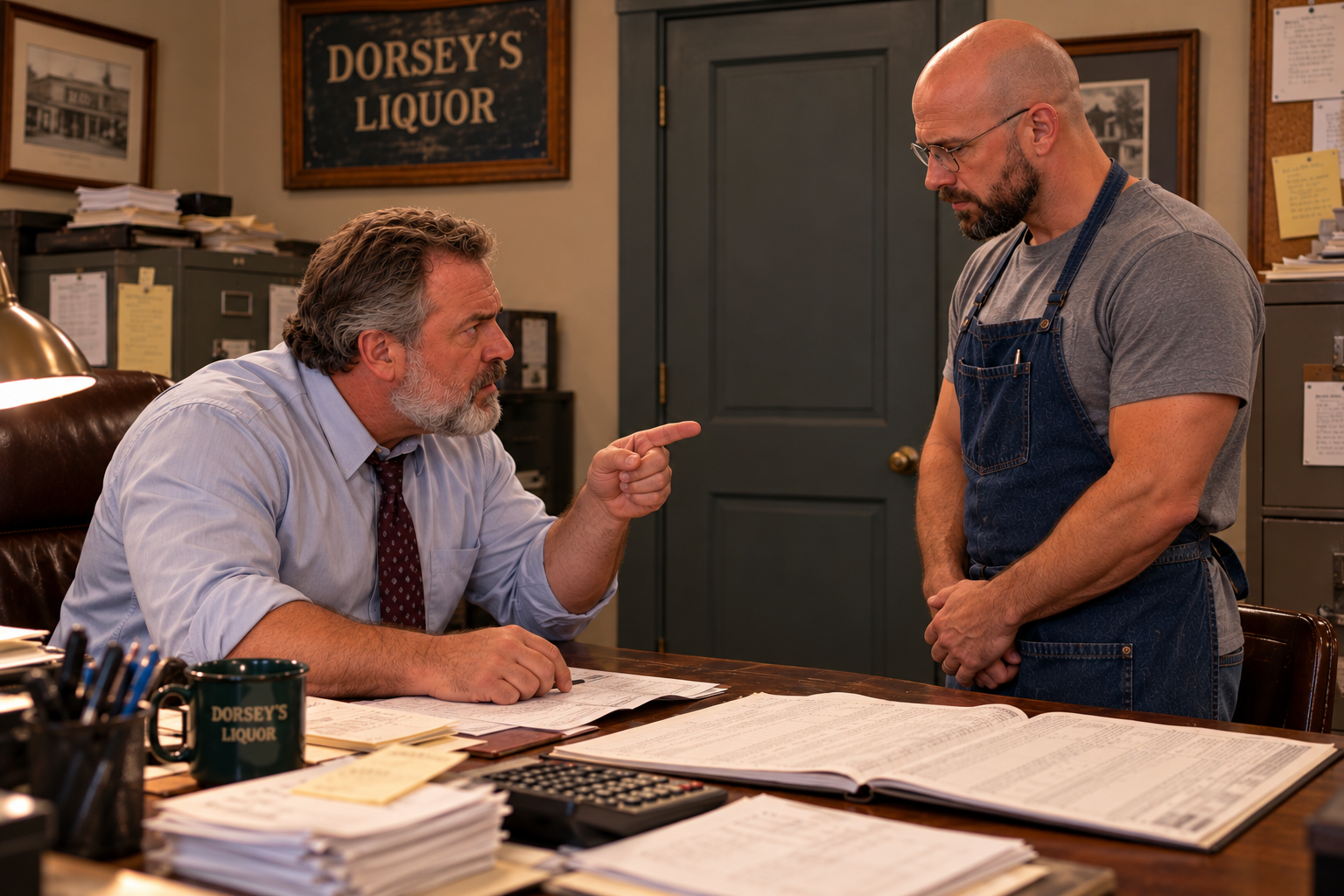 The accusation started on a Tuesday. I remember because Tuesdays were delivery days, and I had a pallet of wine waiting in the stockroom when Mr. Dorsey called me into his office. He had not been in the store for weeks. That morning he arrived wearing a pale blue shirt and a tie that looked too formal for the heat. He shut the office door behind us.
 I stood. “Can I call my husband?”
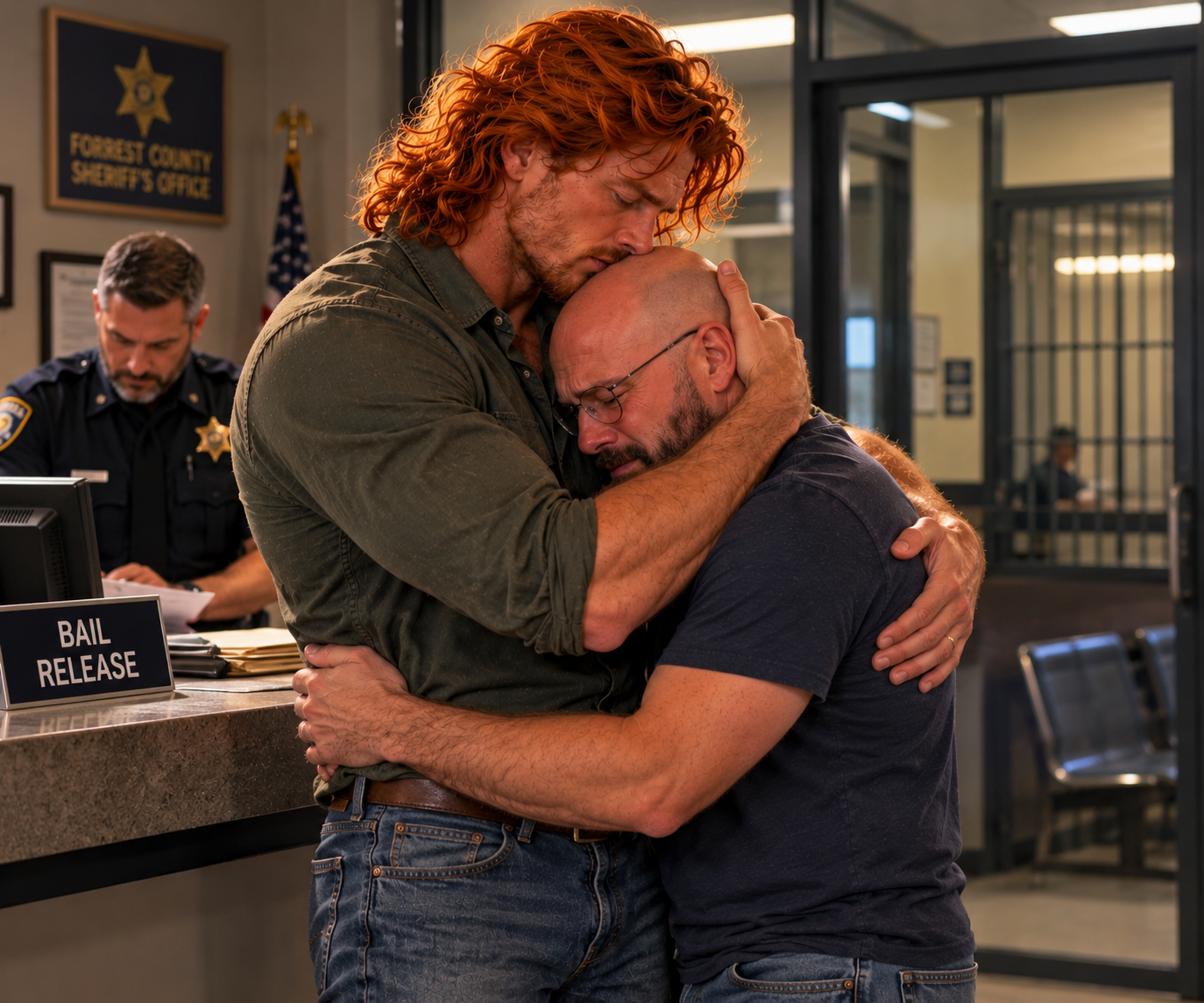 The bond was set that evening. It was not small. The judge said the amount reflected the size of the alleged loss and the fact that I had managed the store’s finances. Joe sat beside me in the courtroom. He kept one hand around mine under the table. When the judge finished, Sara asked for a lower amount. The prosecutor argued that I had access to the cash and the deposit process. I heard him list dates and figures as if he were reciting weather. The judge lowered the bond enough that Joe and his uncle could put up the money, but it still swallowed most of the savings we had set aside after the wedding.
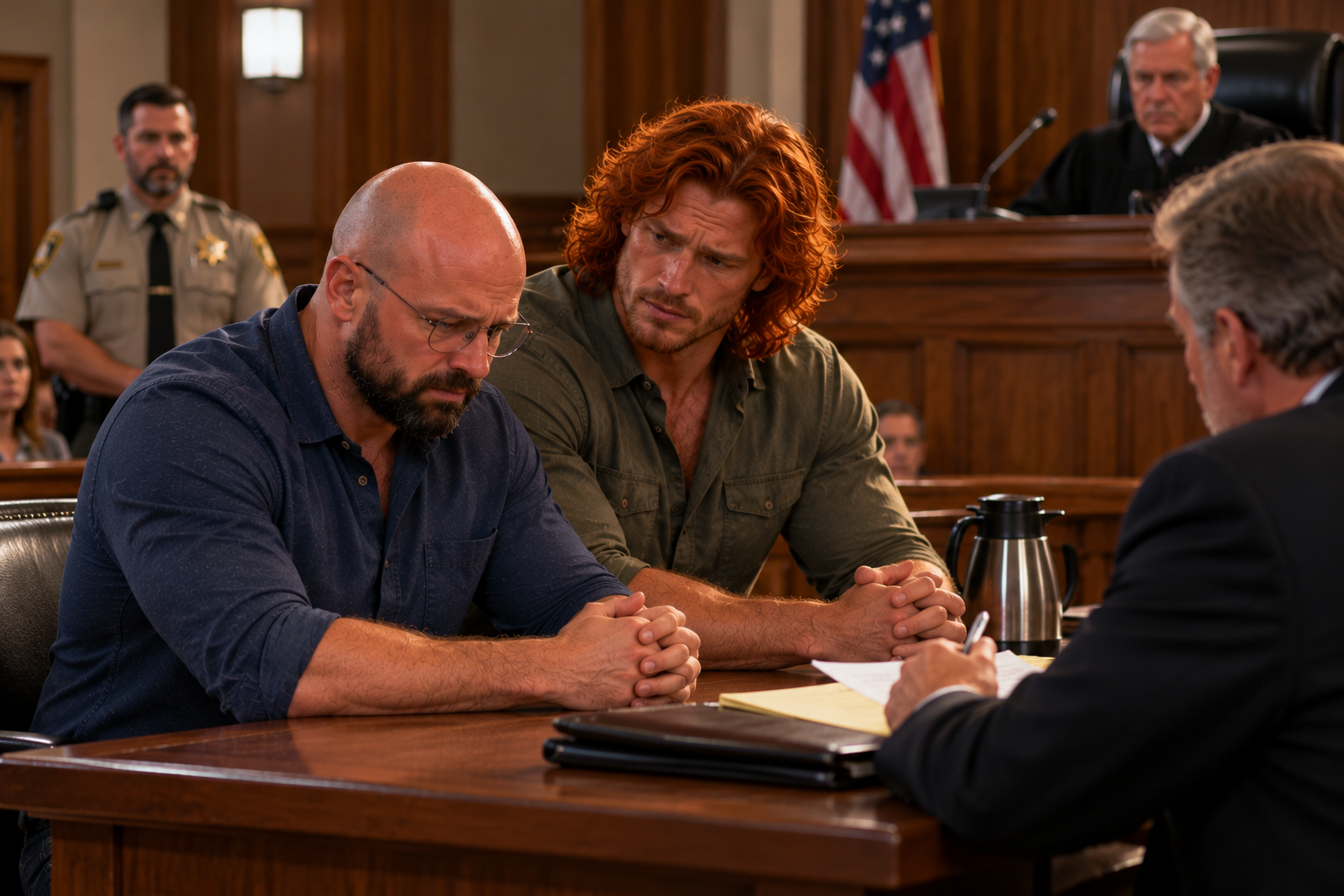 The prosecutor’s opening statement was confident and neatly arranged. He showed the jury copies of the deposit logs and the bank statements. He said the evidence would prove that I had stolen forty-three thousand dollars from a store that had trusted me. He said I had been the person responsible for those deposits. He said I had used my position to hide the theft in ordinary paperwork. He never called me a monster. He did not have to. He made me sound like a sensible man who had made a terrible decision and believed he could get away with it.
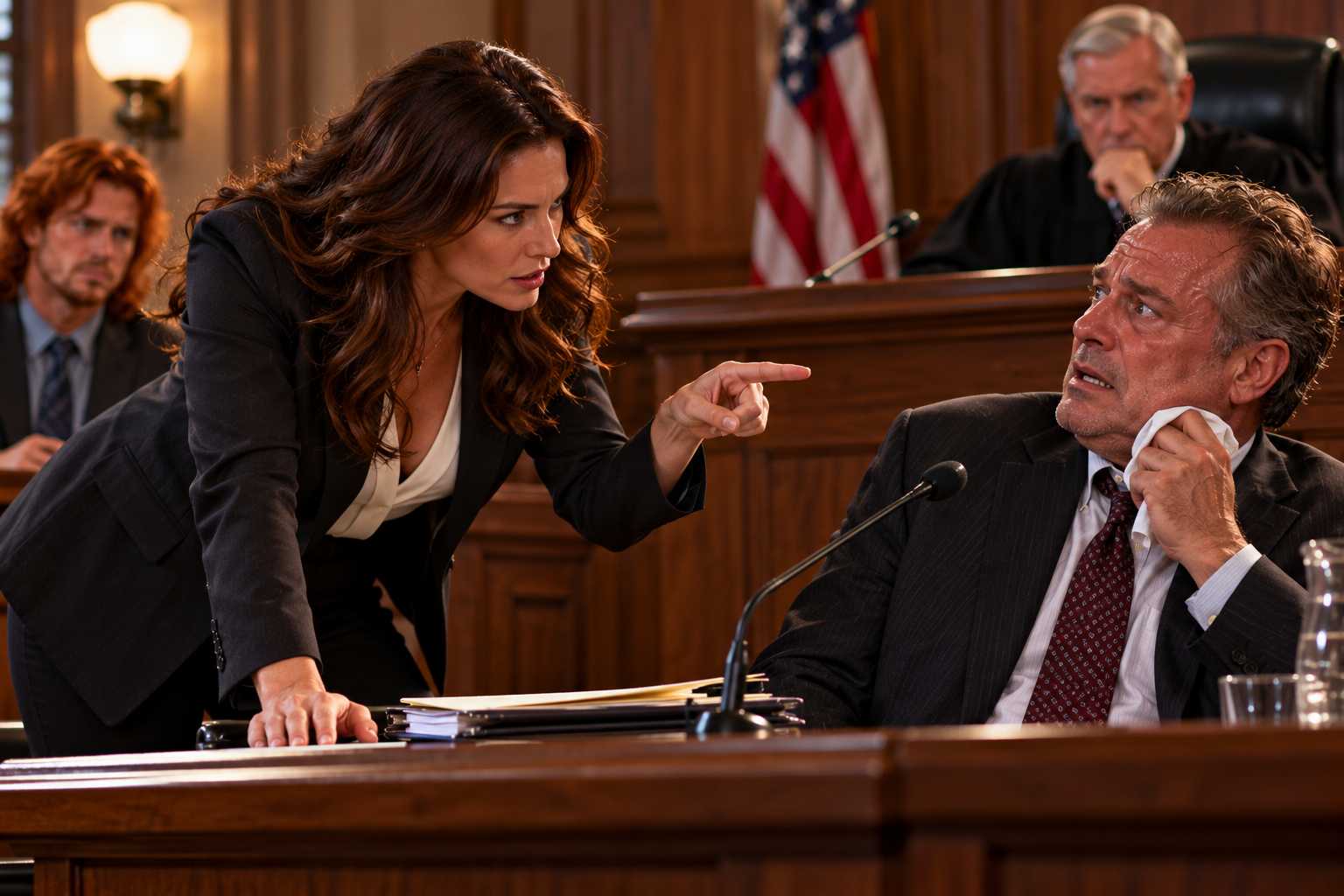 It was then Sara's turn.
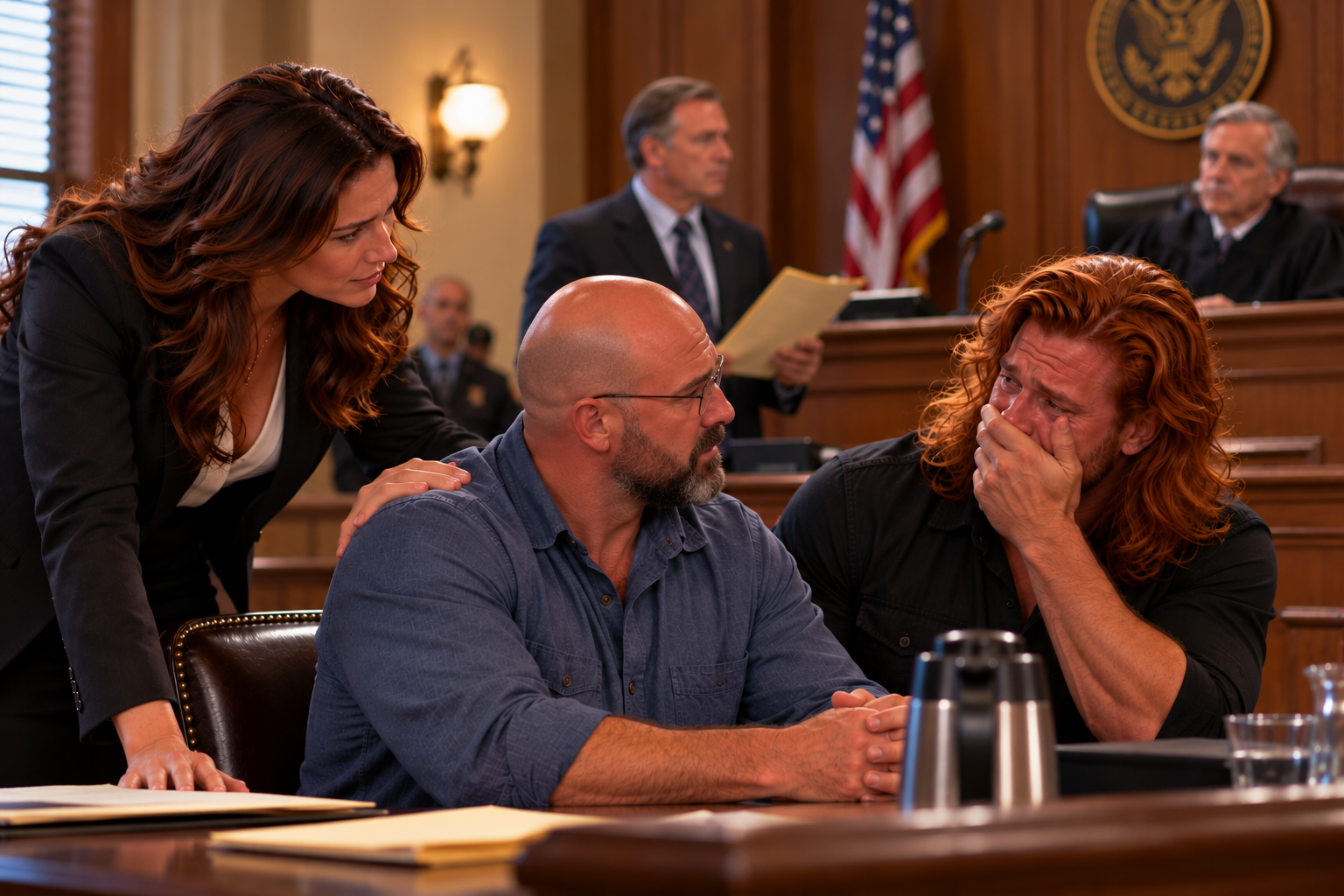 I heard the words. They did not reach me at first. I was watching Joe. He had his hand over his mouth and tears in his eyes. Sara touched my shoulder and said, “You’re free to go.”
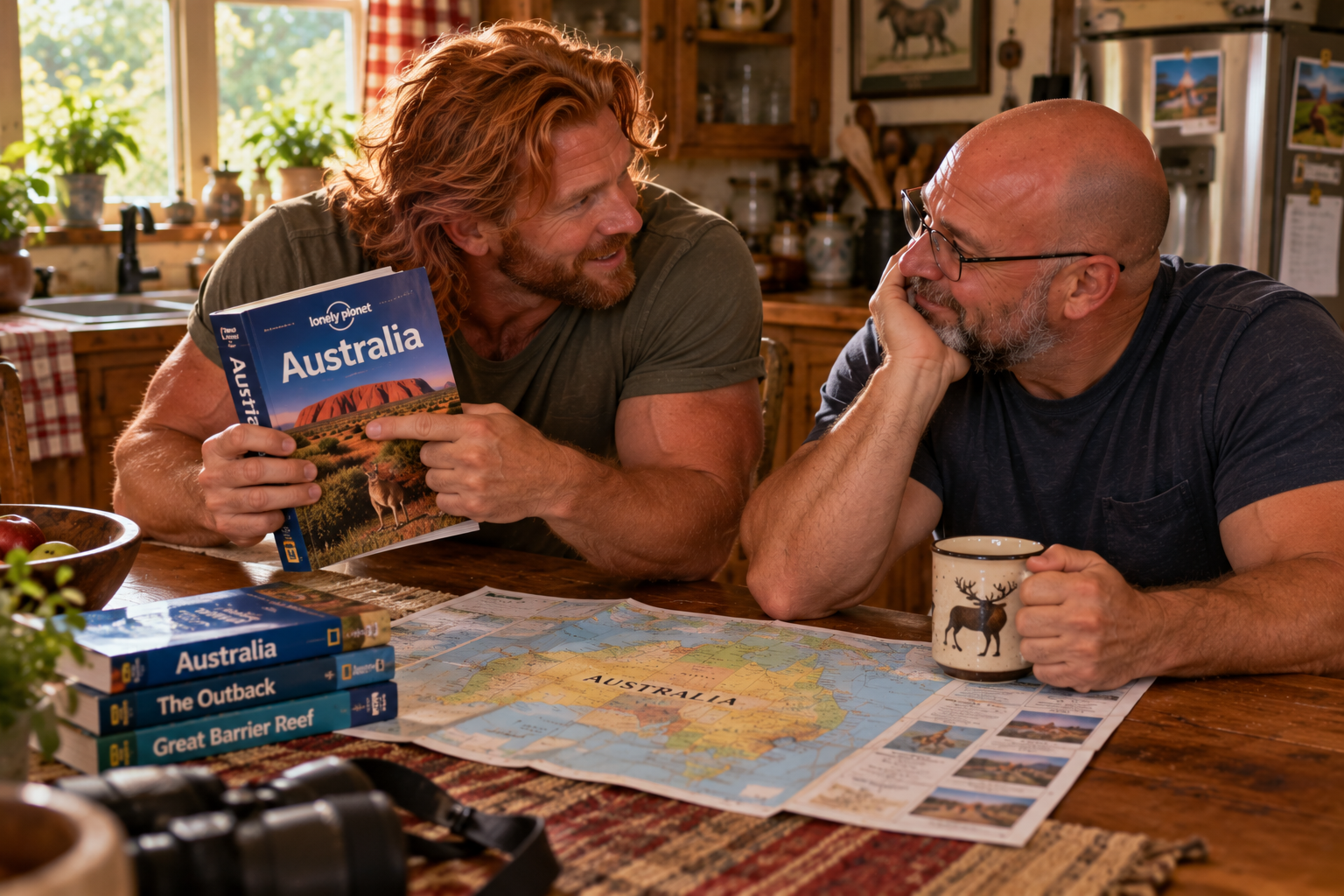 A month later, when the settlement was final and the last legal paperwork was signed, Joe came home from work with a travel magazine folded under his arm. He set it on the table beside the mail.
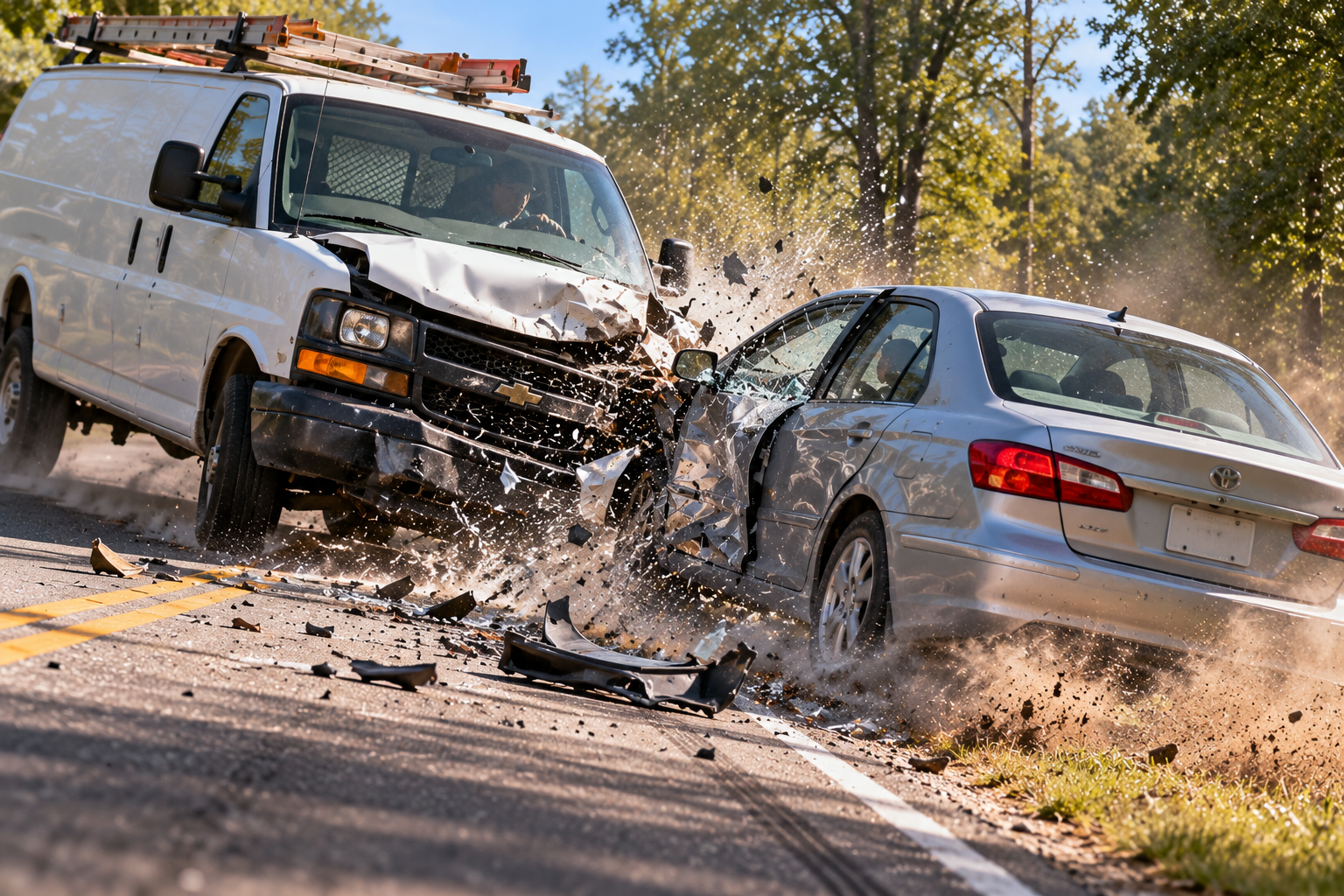 We had driven about twenty minutes when the car rounded a curve and a work van was approaching from ahead.
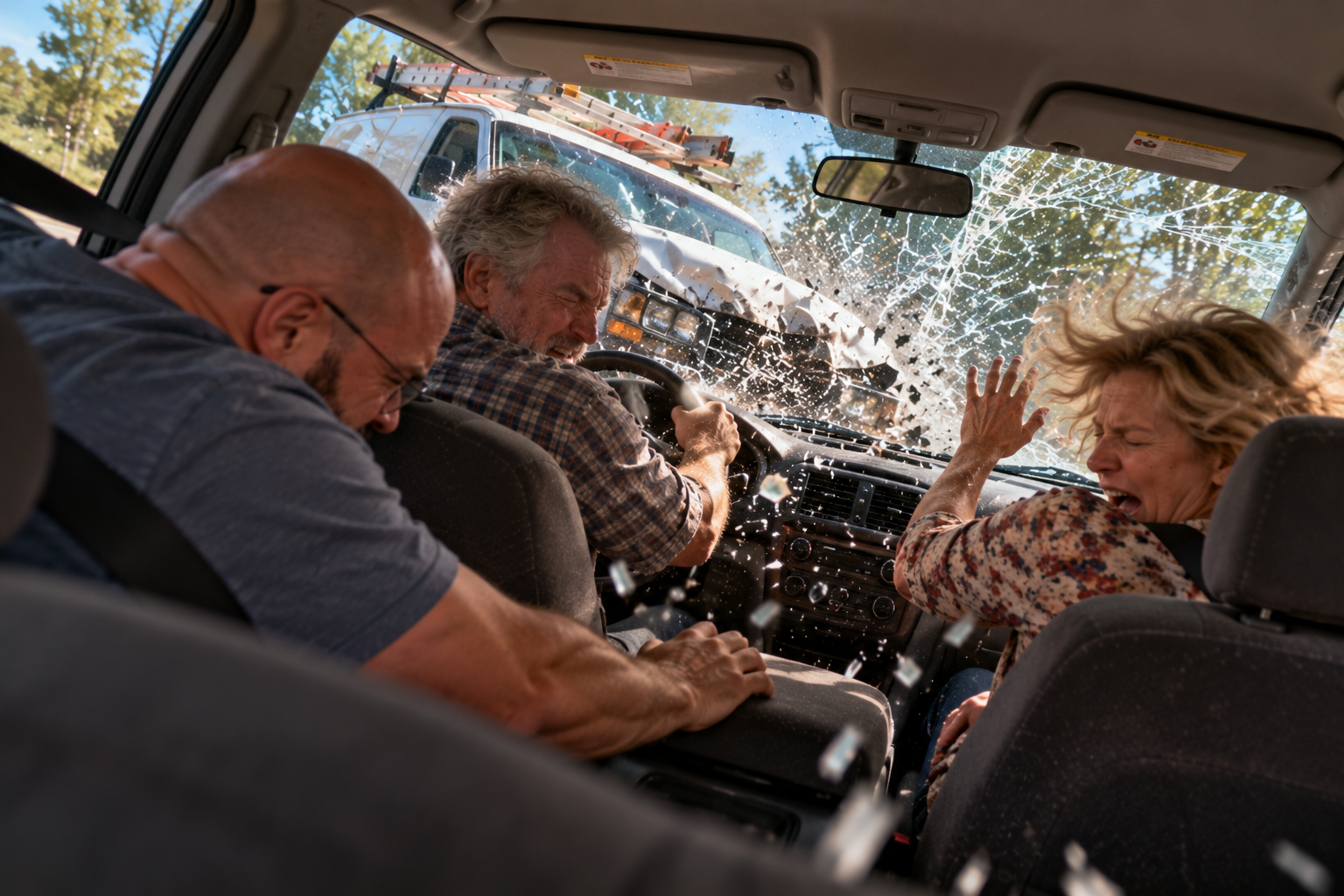 The world spun. The side window shattered. Something hit the side of my head. My shoulder slammed into the door, then the belt caught me again. Metal folded and the airbag went off with a powdery burst that smelled like smoke. There was a second impact, lower and harder. I heard Marlene make a sound, or thought I did. I heard Ray say something I could not understand.
 “Joe?”
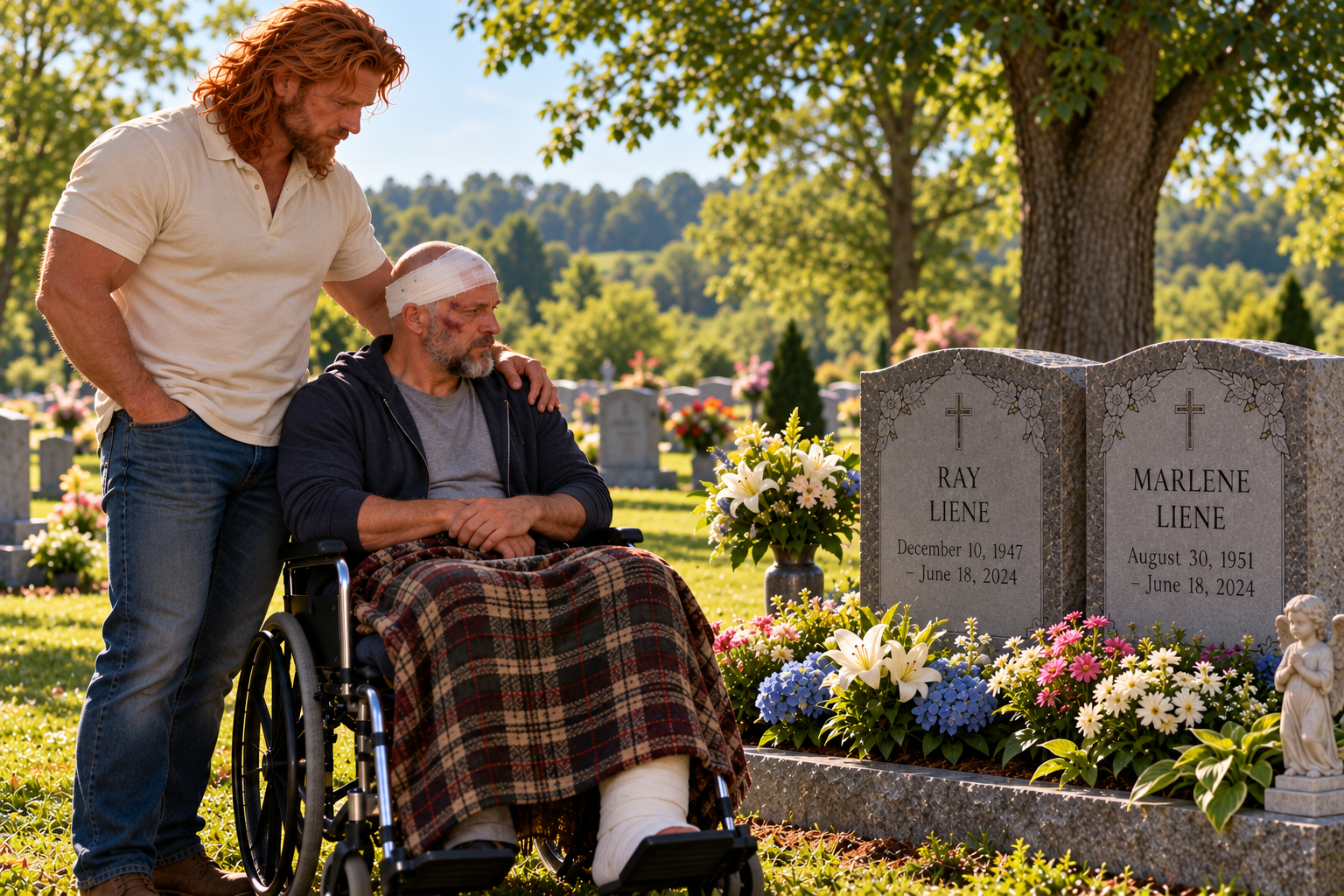 We went to the cemetery after I could manage a transfer into the car. Joe’s cousin met us there. The grass was damp, and the wind was sharp. I sat in the wheelchair while Joe stood close, one hand on my shoulder. There were flowers on the graves. Marlene’s marker had her full name and dates. Ray’s had a small carving of a fishing rod because he had spent half his life by the water. I looked at them and wished I had been able to go to the funeral. I wished I had one more chance to tell them thank you for the ride, though it was such a small thing to thank them for and such a large thing to have lost.
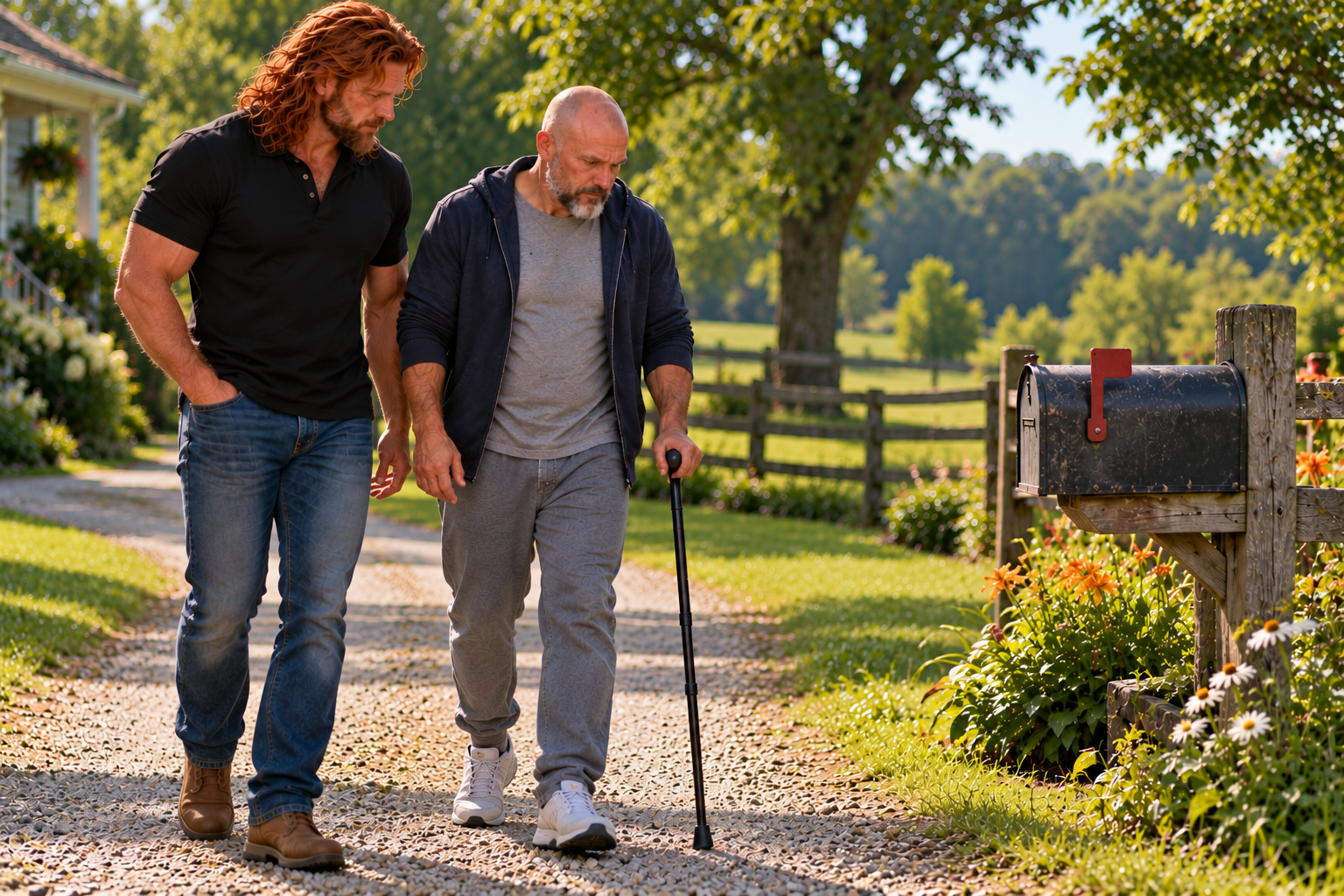 The first time I walked out to the mailbox with a cane, Joe walked alongside me in case I needed his support. I told him this was ridiculous. He said it was his job to be with me in those moments that I might need him. I told him he was hovering. He said he was supervising. I said that was my job. He said marriage was about sharing duties.
